From the Shore to the Deep: My Journey as a Community Monitor from Mozambique Island
By Samira Jamu | November 25, 2025
First launched in 2018 in Mozambique, SWP’s Community Stewards of Heritage Program trains local community members to scuba dive and conduct non-destructive site documentation, enabling them to participate in underwater archeological research and public interpretation.
I was 13 years old when I started volunteering at the local library on the Island of Mozambique, teaching children how to read and write. My childhood was marked by moments of fascination when swimming, collecting shells with my friends, and watching fishermen coming from the sea every day. I often saw archaeologists, divers, and researchers coming from all over the world to the island to study our maritime cultural heritage. I would watch them and think,
“What was the world like beyond the coast?”
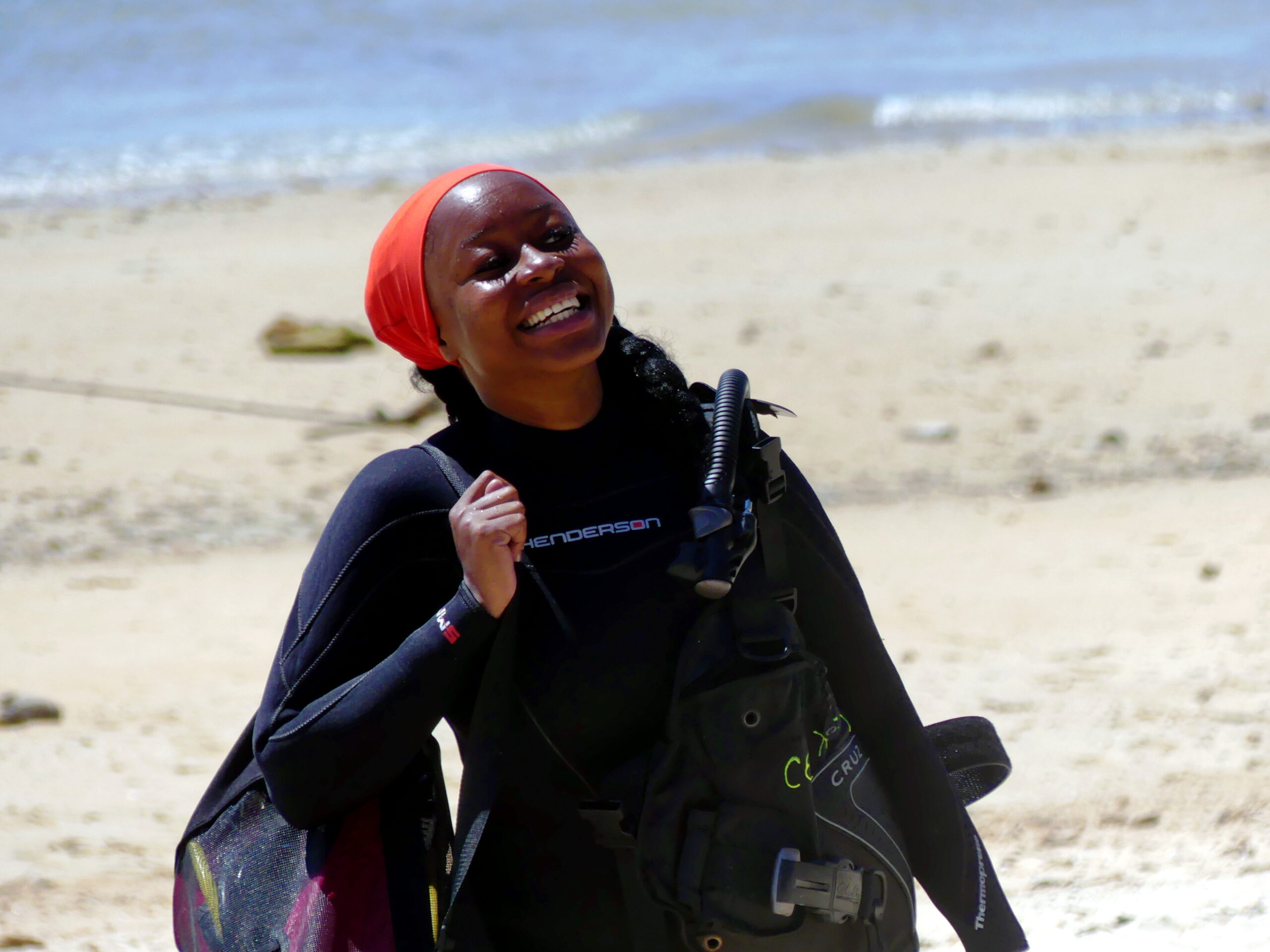
Photo by Yuri Sanada, 2025
I wanted to do the same. I didn’t know that a seed was being planted in me.
Growing up on the island, the sea was always present in my life, but as a girl, I was told that the ocean wasn’t a place for women. Traditionally, women stayed close to shore, collecting shells, while men went out in boats fishing or diving. But I felt deeply connected to the sea and wanted to break that barrier to prove to myself and to the women from my community that women, too, belong in the ocean.
In 2018, I heard about the Community Monitors Program supported by the Slave Wrecks Project (SWP). It was the opportunity I had been waiting for. I applied, and was accepted; that step changed everything. I joined the program when I was 17, and when I got my open-water scuba diver certification, I became the youngest scuba diver on Mozambique Island to become PADI-certified through The Slave Wrecks Project. I remember my first dive, the colors of the coral, the fish swimming around me, and how the sunlight looked underwater. It felt peaceful, like being on space, in that moment I realized I was not just diving for myself but diving for my people, culture and for the generations of women who had been told “The sea is not a place for women”. Becoming a community monitor empowered me as a local woman; I started understanding how important my role is to change the narrative.
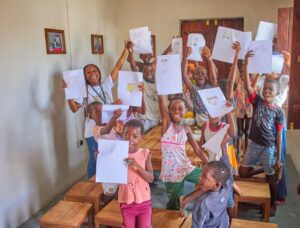
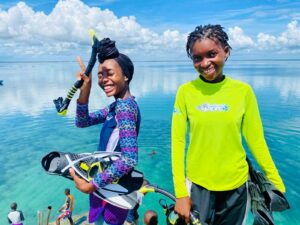
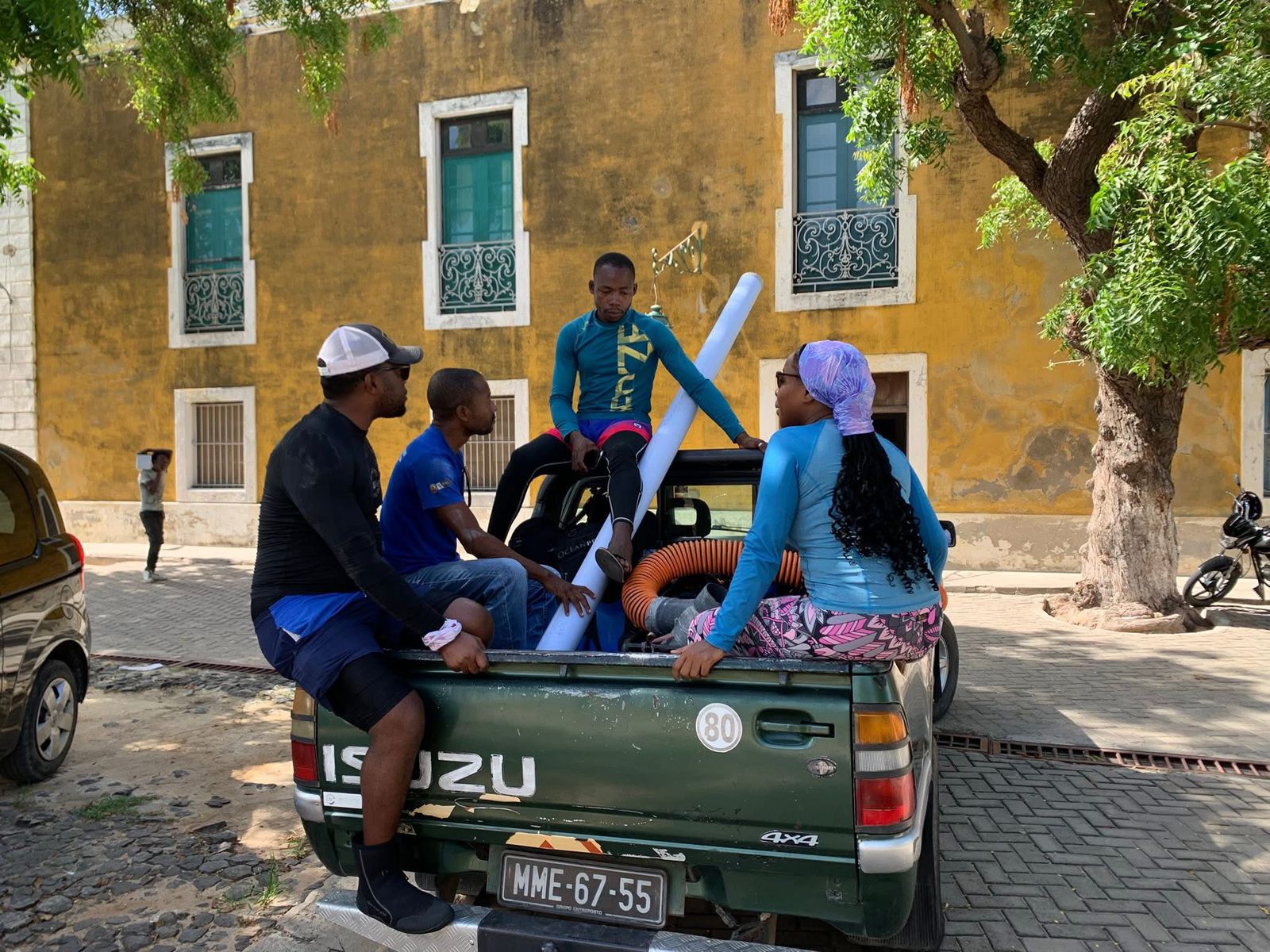
A few months after I joined the program, I created Orampelela, a community-based initiative that raises awareness about the conservation and preservation of cultural and natural heritage on Mozambique Island. Through Orampelela, I work closely with women and young girls from my community, inspiring them to see that they too can be part of protecting our heritage. Being part of The Slave Wrecks Project and CAIRIM (The Archaeology Centre of, Research and Resources of Mozambique Island) gave me the chance to collaborate with incredible mentors like Jay Haigler, Kamau Sadiki, Cezar Mahumane and Celso Simbine. Their guidance helped me understand not only the technical side of underwater archaeology but also, it’s meaning and that through heritage, we can build stronger, more inclusive communities.
Over the years, I grew both personally and professionally. I did my Advanced Scuba Diver Training, Rescue Diver, and recently, I got my certification as a Master Scuba Diver. Today, I feel more confident in the sea and that I can assist other divers, lead dives and participate in underwater archaeology field work. Each certification wasn’t just a step in diving;, it was a step in reclaiming a space where w
men from my community were once invisible.
Echos of the Past: Ilha de Mozambique
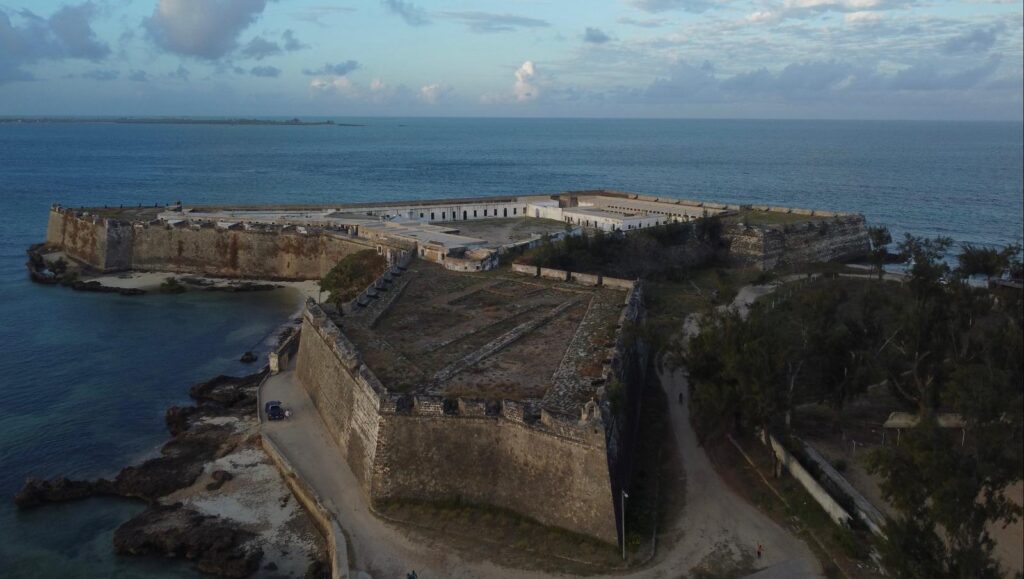
As a community monitor trained by The Slave Wrecks project and now working at CAIRIM and leading a community-based project, I’ve had the chance to be part of significant underwater archaeological fieldwork, documentaries with CNN, Art TV, and RTP, and international scientific-diving training in Turkey. These opportunities have opened doors that I never imagined; from conferences to cultural exchange programs, all rooted in that first dive that changed my life. One of the most inspiring moments of my journey has been meeting other Black women in maritime Archaeology and diving, women like Gabrielle Miller, Tara Roberts, and Vanessa Haigler. Seeing women who look like me doing underwater archaeology and marine research gave me a sense of strength and belonging. Representation matters, and it’s powerful.
Today, as a scientific diver, community leader, and advocate for heritage conservation, I carry the lessons of the Community Monitors Program with me in everything I do. This program didn’t just train me, it transformed me. It taught me that the ocean isn’t a boundary, it’s a bridge connecting our past and our future.
Each dive, each project, each young person I teach is part of a much larger story, a story about memory, resilience, and hope. And I am proud to be one of its voices.