In Slavery’s Wake and the Camargo
December 10, 2025
Introduction
In November 2025, the traveling exhibition In Slavery’s Wake opened at the Museu Histórico Nacional in Rio de Janeiro, Brazil. As the second location of the exhibition and the country that received approximately 40% of all enslaved Africans trafficked to the Americas, Brazil provides profound opportunities to link the work of the Slave Wrecks Project and the In Slavery’s Wake exhibition. Read more about the connections between the Slave Wrecks Project and In Slavery’s Wake in our blog In Slavery’s Wake & The São José
In Slavery’s Wake: Making Black Freedom in the World is a global curatorial project that is cohosted by NMAAHC, with participation from museums across four continents.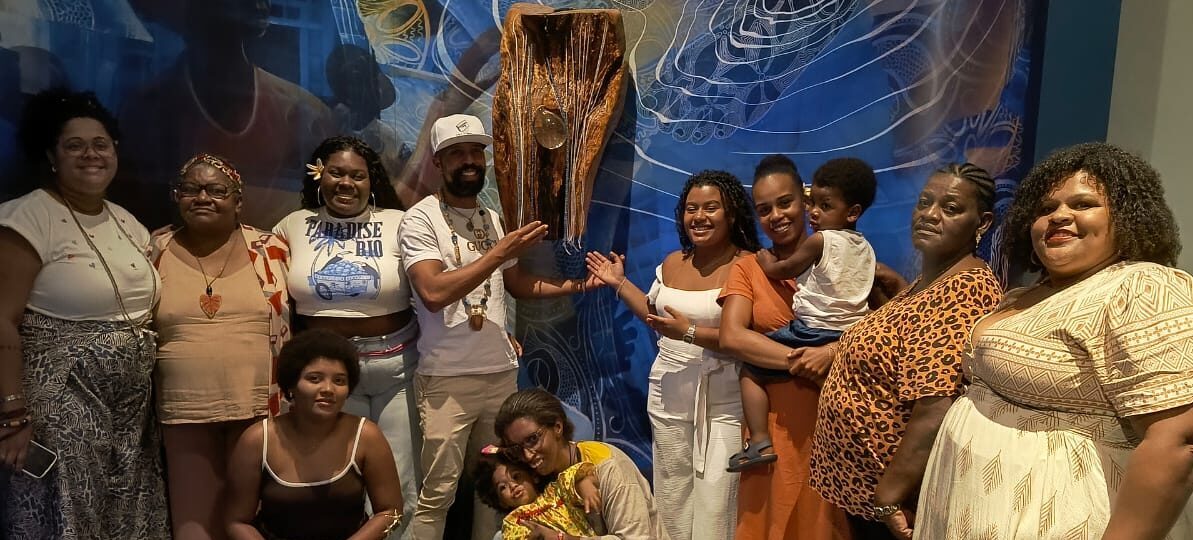
With such a vast expanse of content, it is impossible for In Slavery’s Wake to highlight all instances of healing and Freedom Making. Despite this, the Afro-Brazilian community of Bracuí and artist Daniel Minter were able to bring the local story of the Brigue Camargo and the Quilombo de Santa Rita do Bracuí into meaningful conversation with the larger exhibition. Days before the opening, a small cohort traveled two hours down the coast to the Quilombo de Santa Rita do Bracuí. They journeyed to collect water from the Bracuí River.
The Wake Continues
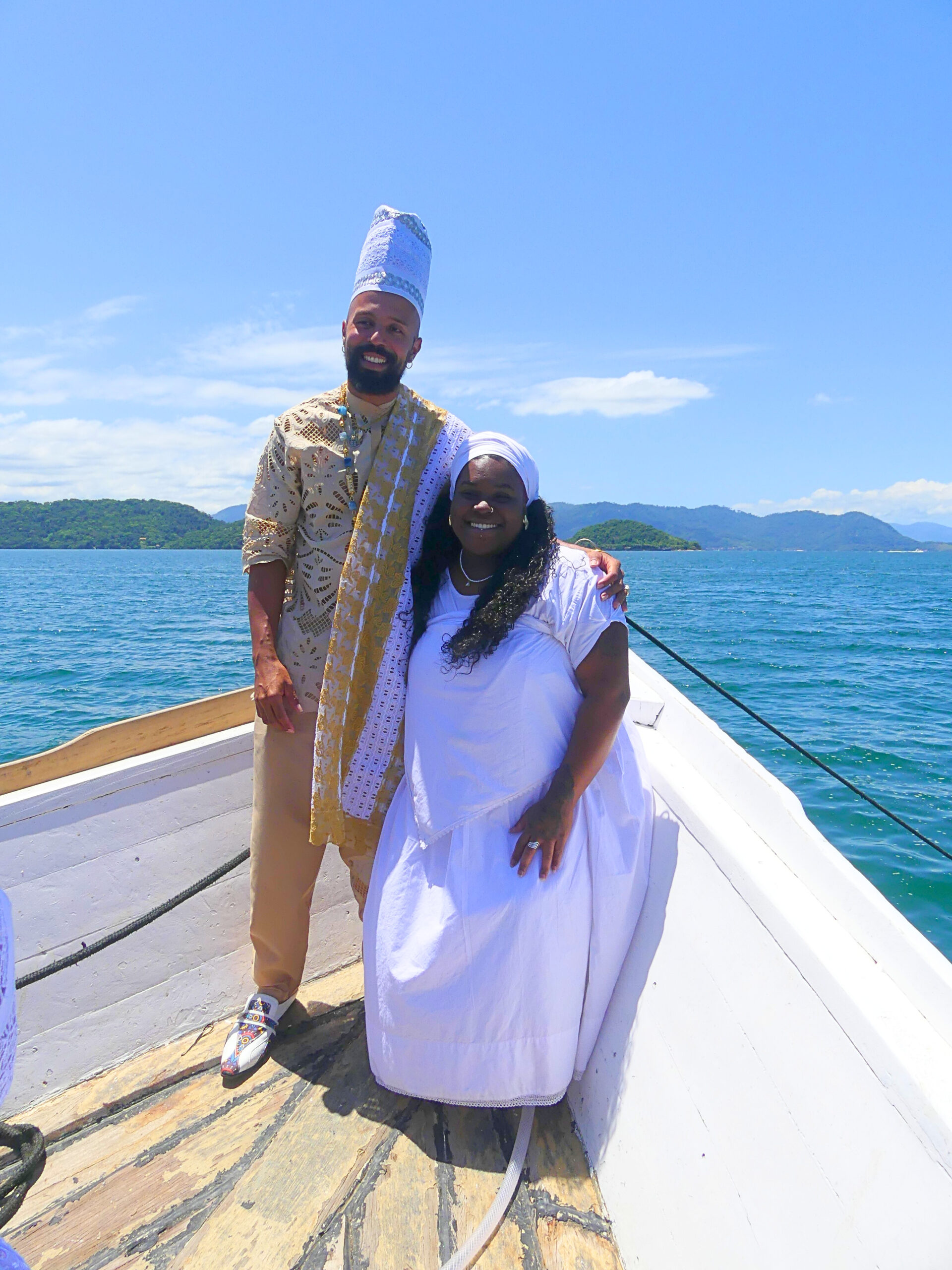
Members of the Quilombo de Santa Rita do Bracuí, November 2025
Descendants of the enslaved people from the Santa Rita do Bracuí farm now form the Quilombo do Bracuí and fight to remain on the land of their ancestors. Their heritage, cut by the intense waters of the Bracuí River, is expressed in jongos, memories, stories, and ways of planting. They represent and bear witness to the history of freedom and the fight against racism in Rio de Janeiro, Brazil, and worldwide. The work of the Slave Wrecks Project and its partners in Brazil – AfrOrigens and the Quilombo itself, ensures that this work is also about reclamation, about healing, and about empowerment.
The Brigue Camargo, built in Maine and captained by Nathaniel Gordon an American slave trader, was intentionally sunk in 1852 in the waters of Angra dos Reis Bay, at the mouth of the Bracuí River, after disembarking about 500 Africans from Mozambique, Quilimane, and Mucena. Those enslaved Africans were first held at the Santa Rita do Bracuí farm, and from there they would be sold to coffee plantations across the Paraíba Valley. At that point, the trafficking of enslaved Africans was already prohibited in Brazil. The story of the Camargo is one of trafficking, of pain and of violence.
Water Collection and Freedom Making
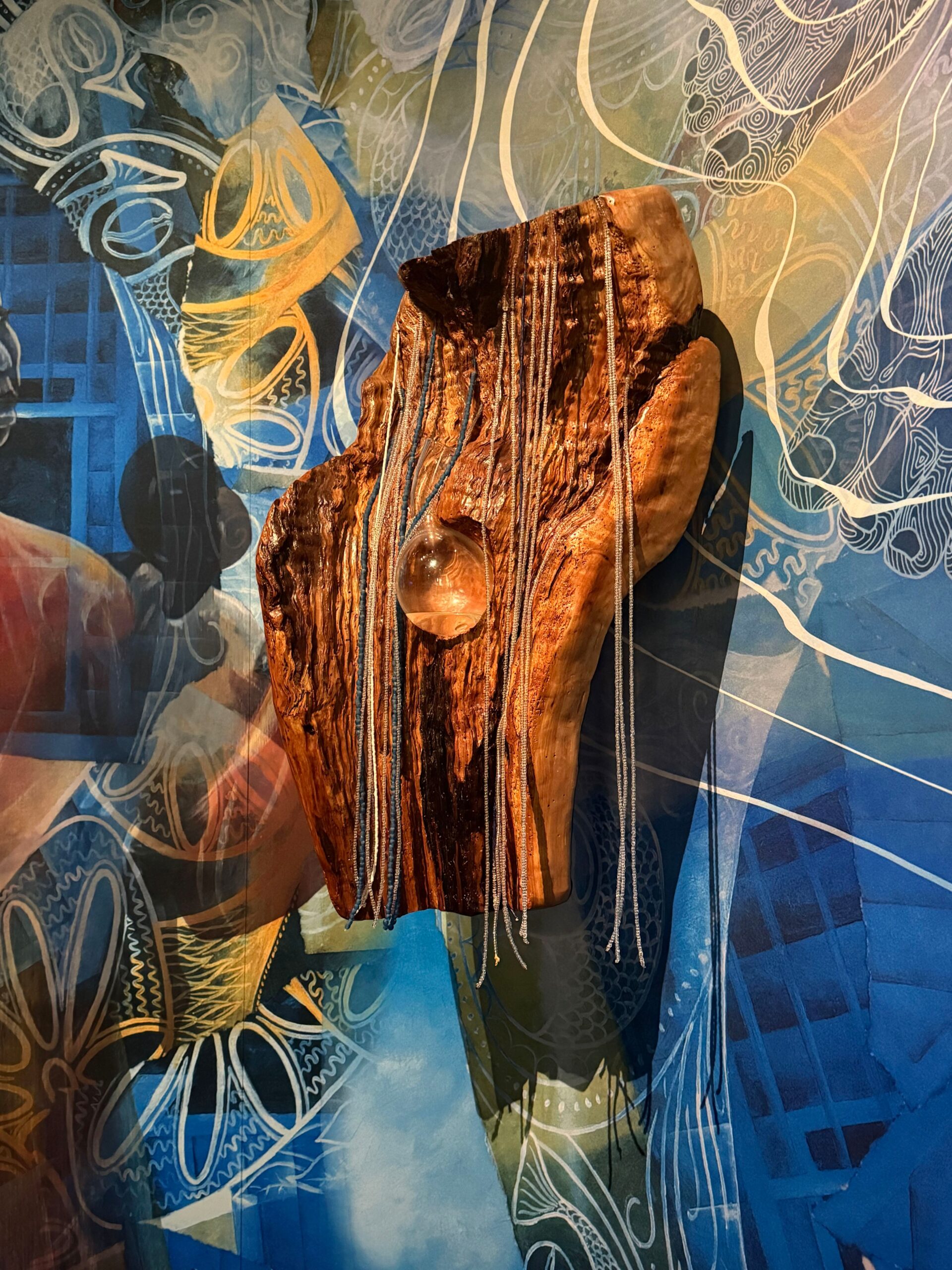
Water installation in the Universe of Freedom Making
Within the exhibition “In Slavery’s Wake: Making Black Freedom in the World,” the artistic installation created by Daniel Minter entitled the “Universe of Freedom Making” is the heartbeat of the exhibition—a space for memory, reflection, and healing. It evokes a history not just as a source of pain but that legacies of freedom and humanity are waiting to be reclaimed here. At the center of the installation is an open-mouthed glass gourd that is filled with water and evaporates over the course of the exhibition into the space becoming a part of the air that is being breathed by visitors. Collecting water from the site of the Camargo is one way of bringing this story and the community into a global effort of freedom making.
The waters collected for the “Universe of Freedom Making” from different sites on four continents become a symbol of resistance, spirit, and hope, filled with stories and energies from those who carry these histories in their bodies, minds, and communities. Understanding that water is not something that separates but also connects and cleanses.
Water, Universe of Freedom Making a Statement by Daniel Minter
This exhibit travels to four continents to places linked by a long history of inflicted terror and a history of continuing struggles. But these people are linked by a greater force than history. Our great mother the ocean binds us to her on a molecular level.
This sculptural feature represents the water that is us. The ocean, the rivers, the blessing of rains hold the essence of all we were and of what we will become.
As the In Slavery’s Wake exhibit travels between the Americas, Africa, and Europe water will be gathered from a specific point in each location. A point that holds a powerful or accumulated reservoir of our ancestors’ presence. For example, a place where we were able to free ourselves from enslavement by returning to the waters to cross the ocean or to rest with the mother. The tragedy of a shipwreck or the liberation of open revolt, the water accepts all.
As the water is added to the glass gourd it immediately begins to slowly evaporate and fill the exhibit space with the molecular memory of those souls lost in the crossing. The water is a gesture to let their presence be felt by all.
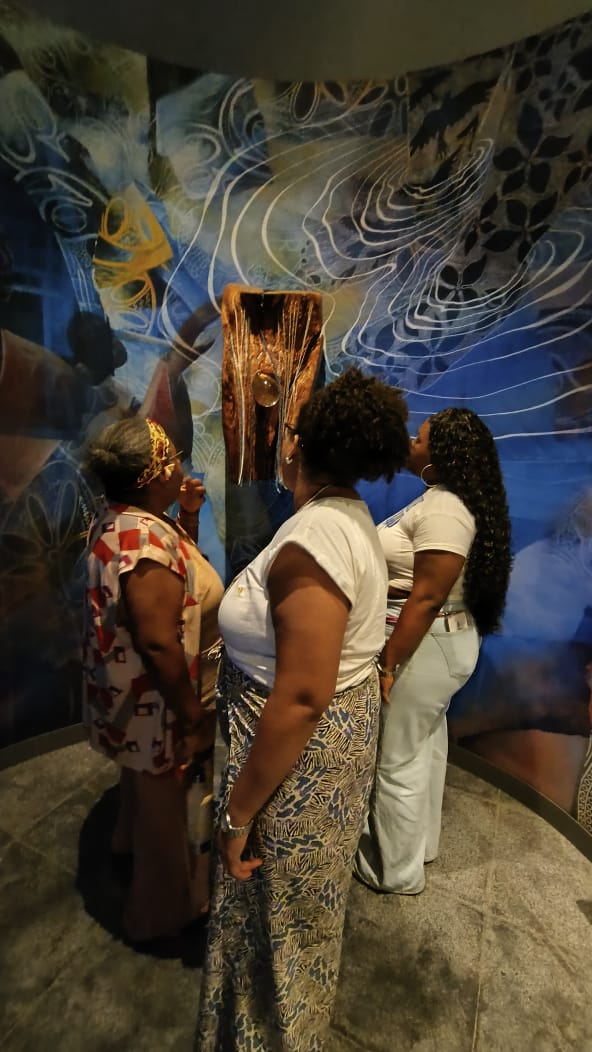
Members of the Santa Rita do Bracuí viewing the water in the exhibition.
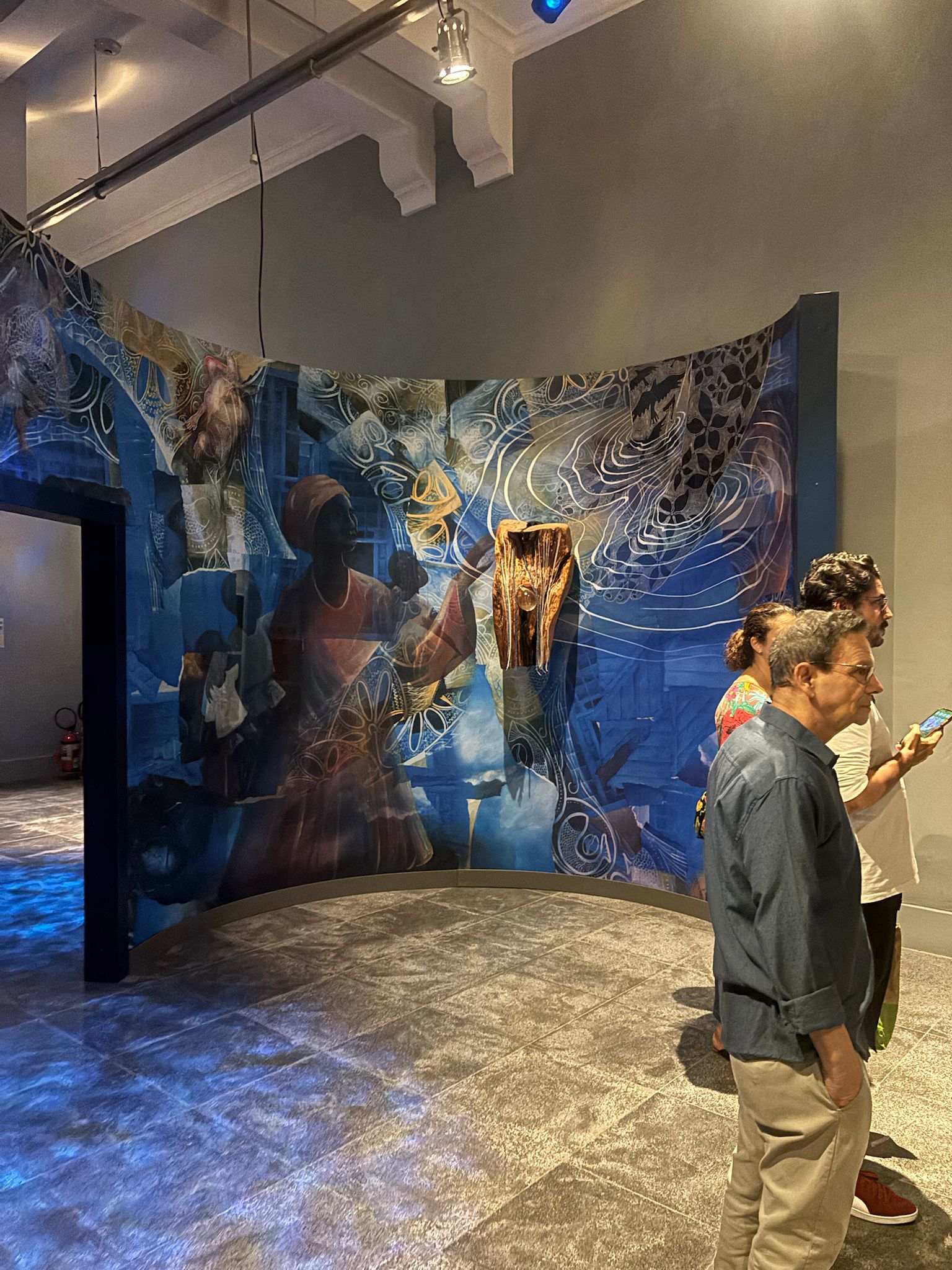
Universe of Freedom Making as displayed in Brazil.