Preserving the Maritime Histories From Our Past
By Angelo Ayedoun | January 26, 2026
A Reflection From My Scientific Diving Experience at Biscayne
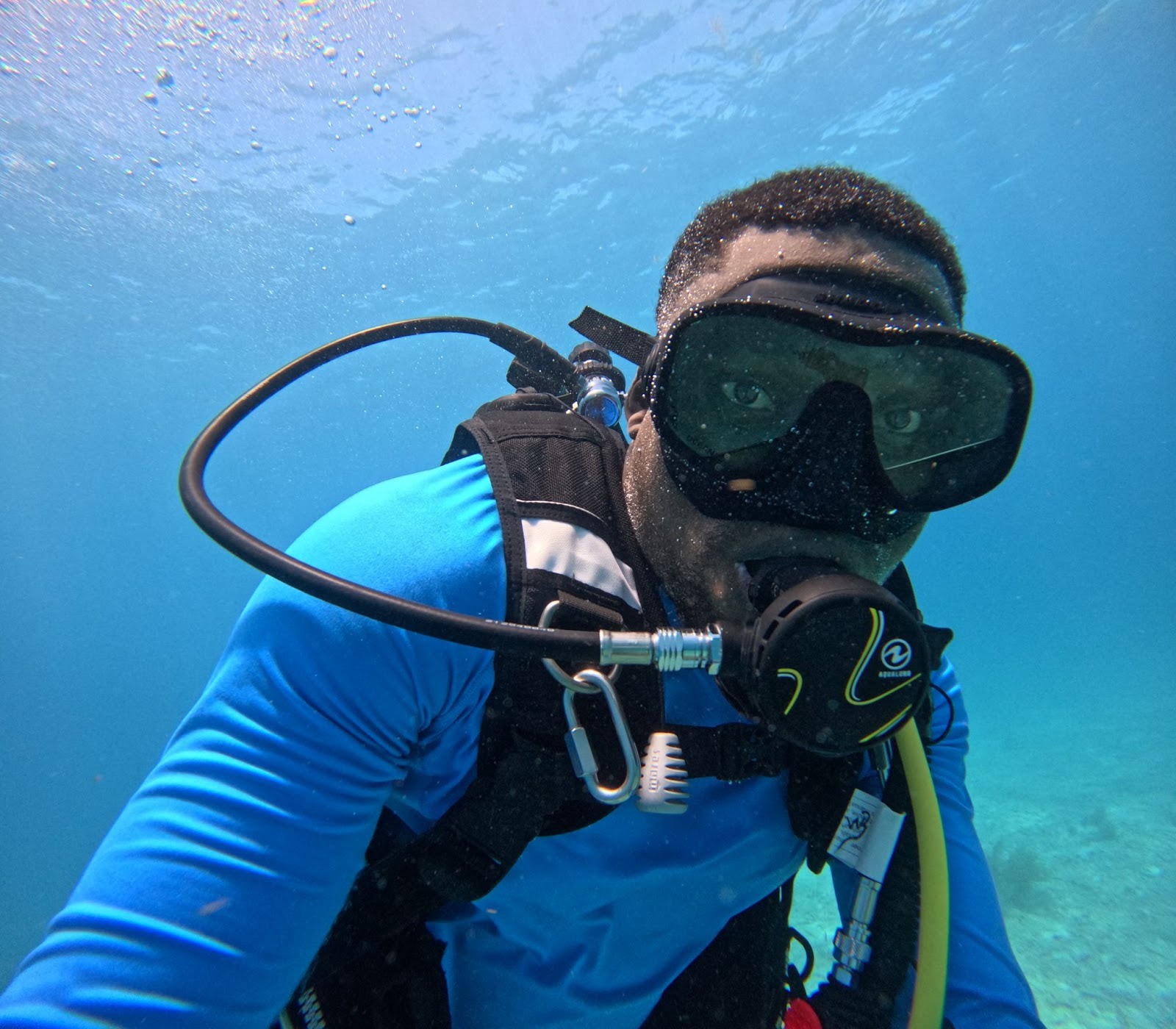
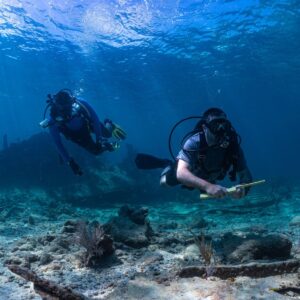
Angelo on a dive in Biscayne National Park, 2025
Like the remains buried beneath our feet, material evidence of the past also lie beneath the waters, fragile and constantly threatened by the ever changing environment conditions of marine space and human actions.
In the Summer of 2025, right after receiving my scientific diver certification, I had the exceptional opportunity to intern at Biscayne National Park. This unique experience allowed me to observe and bask in moments filled with great emotions, a sense of appreciation, and stewardship. The submerged sites and cultural materials at Biscayne National Park offered an opportunity to learn and, with new depth, to appraise what it truly means to be a steward. This experience has reinforced my commitment to promoting and preserving maritime cultural heritage across West Africa and the rest of the world.
When passion becomes a mission, its achievement feels almost instinctive. Obstacles no longer seem like barriers but as vital steps toward the goal I’ve set. I still recall the moment I first formulated my research question: to understand and document the submerged remnants of the transatlantic trade in the Republic of Benin. At that time, a professor told me, “It’s a wasted effort; no one has ever been interested in this subject.”
Far from stopping me, these words rekindled my determination and fueled my thirst for knowledge and exploration. Today, I realize how much this passion for the underwater world has become a true mission: to uncover our sunken history, give a voice to a long-forgotten heritage, and protect the memories resting beneath the waves.
One question often arises from friends, family, and colleagues: why choose water as a research environment? Why should I be interested in these submerged remains? Why take the risk of diving and falling prey to larger ferocious aquatic animals.
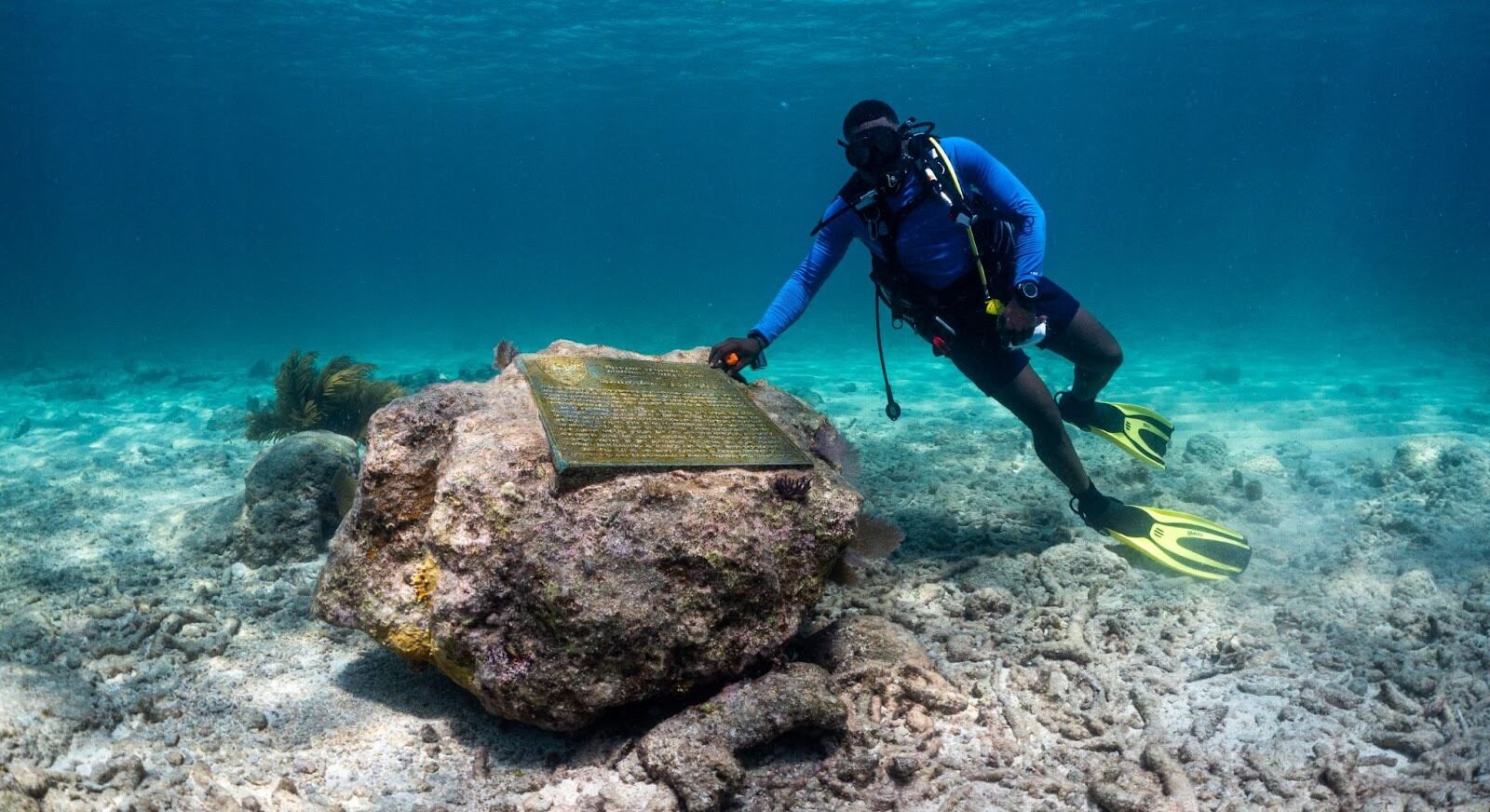
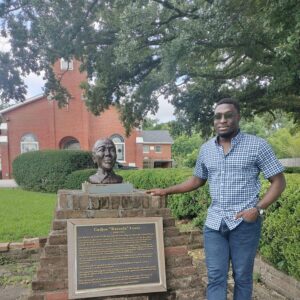
Angelo at the Memorial to the slave ship the Guerrero, Shawn Arnold, NPS, 2025
My response has always stemmed from echoes of my region’s histories of violence and resilience, and hope for restitution and growth.”
As a young chap, I have always been a curious kid, born and raised far from the coast. Growing up in the northeastern Republic of Benin, my first encounter with the ocean in my mid teenage years sparked a deep desire to understand the ocean and what lies beneath its surface. Over the years, this fascination, combined with my academic background in history and archaeology, has fueled an enduring passion for West Africa’s maritime history. Today, this personal and intellectual connection is central to my research, which seeks to link social memories with scientific methods to reveal the voices and traces of sunken coastal societies.
Becoming a scientific diver and Benin’s first maritime archaeologist is the result of a long journey, not just chance.
As part of my training, I was exposed to a range of (terrestrial) archaeological field methods and techniques in Benin, and this training allowed me to develop proficiency in stratigraphic documentation, material analysis, and interpretation, to mention a few. My transition into maritime archaeology was gradual, supported by multiple specialized training courses and hands-on opportunities, including UNESCO regional training on managing underwater cultural heritage, and the Groupe de Recherche en Archéologie Navale (GRAN).
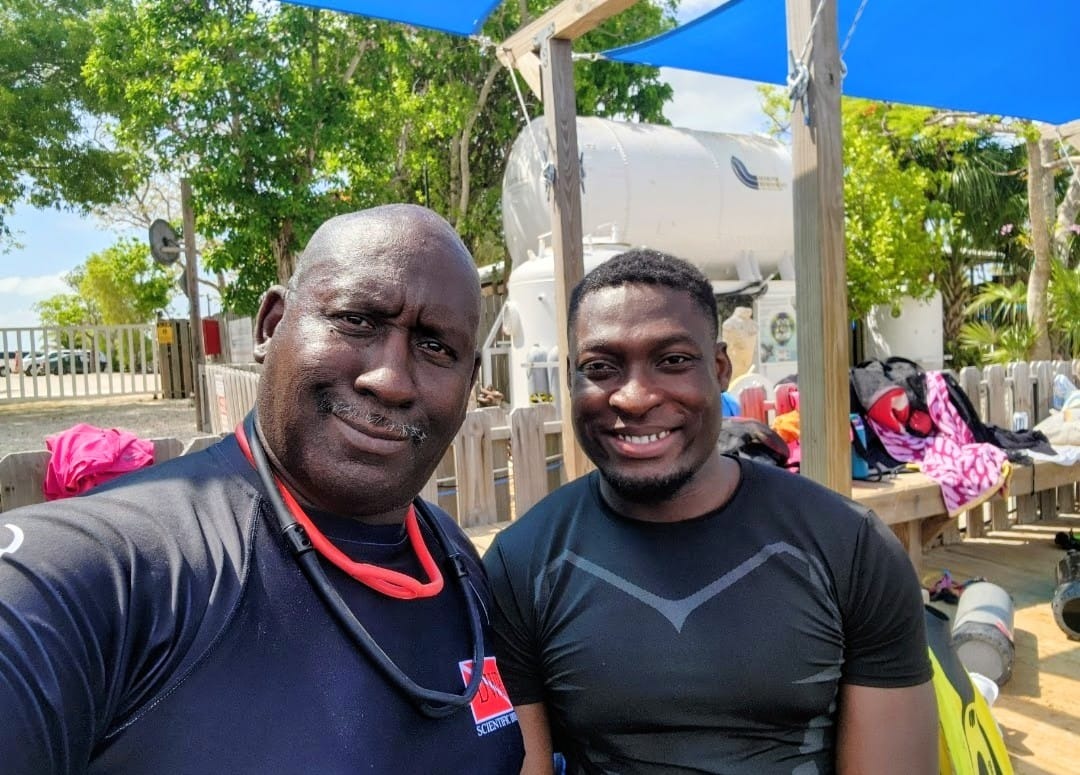
Angelo with instructor Jay Haigler
A significant turning point in my academic and career proclivities was joining the Slave Wrecks Project Academy (SWPA) in Senegal in 2022, made possible by support from IFAN researchers at Cheikh Anta Diop University. I vividly recall that the program centered on interdisciplinarity and international collaboration, and that the training enhanced my maritime archaeology skills and enabled me to connect deeply with diaspora history and significant developments in the field.
Following my admission to the University of California, Santa Cruz, Anthropology doctoral program in 2023, I became more involved in American maritime archaeology research networks. It was through this engagement that I joined the Diving With a Purpose (DWP) program, thanks to my advisor, the SWP, and Jay Haigler’s significant support. Since then, the SWP has played a vital role in my professional development in the United States, thanks to its ongoing support.
In January 2025, I enrolled in the scientific diving program led by Jay Haigler, an AAUS-certified instructor. This intensive training, which combined theory, practical skills, and a challenging final test, enabled me to earn the AAUS Scientific Diver certification, in addition to my PADI certifications and 122 dives under my belt. This certification allows me to conduct underwater research in accordance with international standards. It marks a significant step toward my ability to undertake complex missions, supervise teams, and ensure the safety and scientific integrity of each operation.
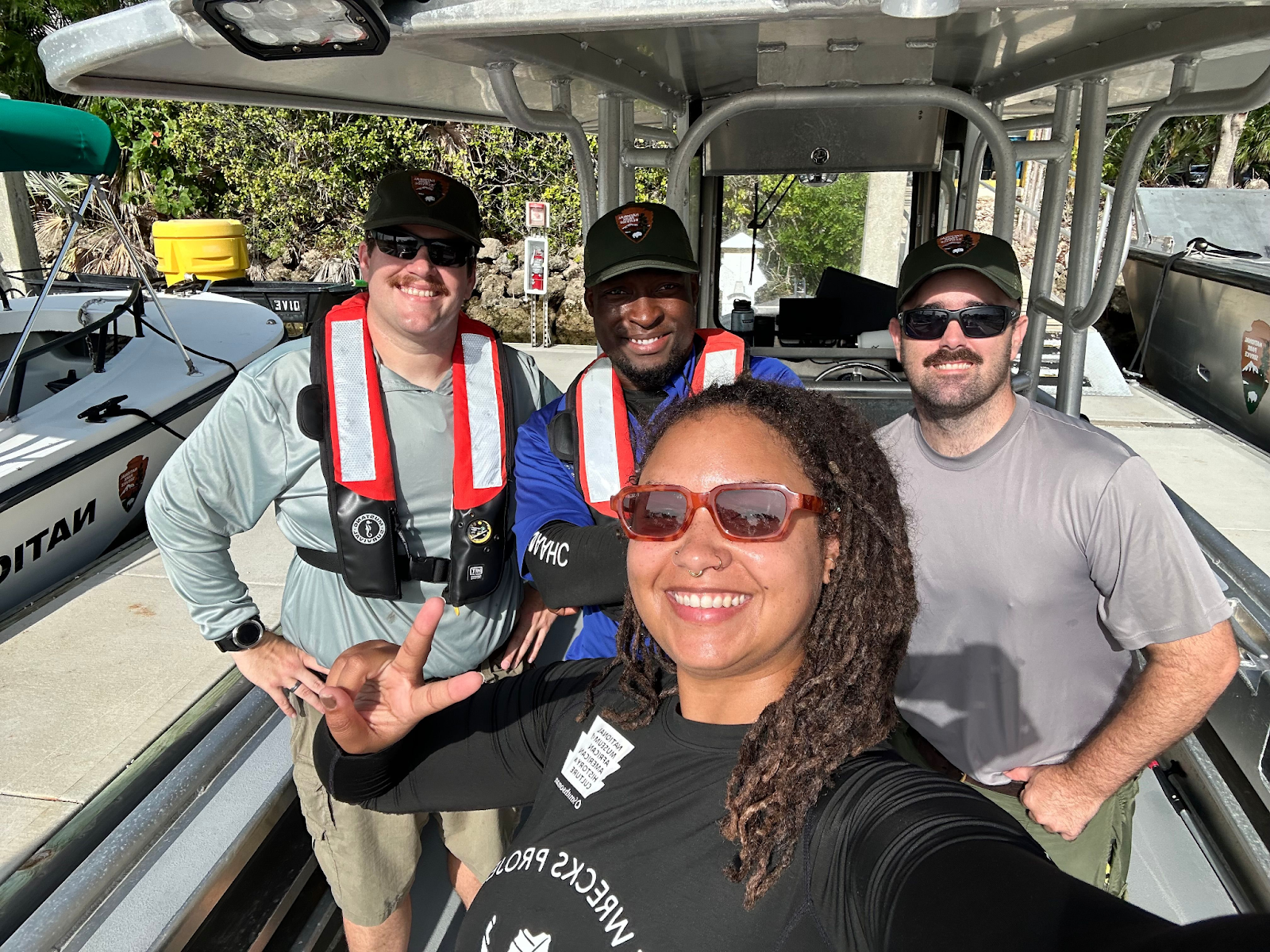
Angelo with Shawn Arnold, Josh Marano and Gabrielle Miller
Following this certification, I completed an internship at Biscayne National Park (Florida), providing a unique immersion in the American approach to submerged site management and protection, combining research, conservation, and community involvement. Under the supervision of Josh Marano, the park’s archaeologist, I focused on managing marine, natural, and cultural resources, with a particular focus on preserving underwater cultural heritage.
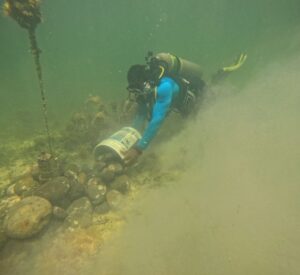
Working with the team at the park, we often spent time conducting site condition assessments, evaluating the condition of several shipwreck sites and land-based locations in the Everglades park, and documenting any damage. These tasks are essential for accurate site monitoring and suggesting mitigation measures tailored to human and environmental risks.
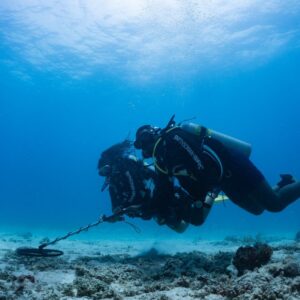
I also observed the cataloguing of artifacts donated to the park by private collectors, which highlights the importance of community cooperation in heritage preservation. My passage through Everglades Park was beneficial and memorable thanks to Arnold Shawn and his team. Under the guidance of Mark, an archaeologist at the Everglades, I was trained in several technical skills: maintaining diving equipment, servicing boats, using full face masks, and handling metal detectors and other visual prospecting tools. Although many submerged sites in Biscayne are already documented, the park’s cultural department continues to search for new sites using remote sensing. I was introduced to side-scan sonar and magnetometers, two key technologies useful in detecting buried structures on the seabed.
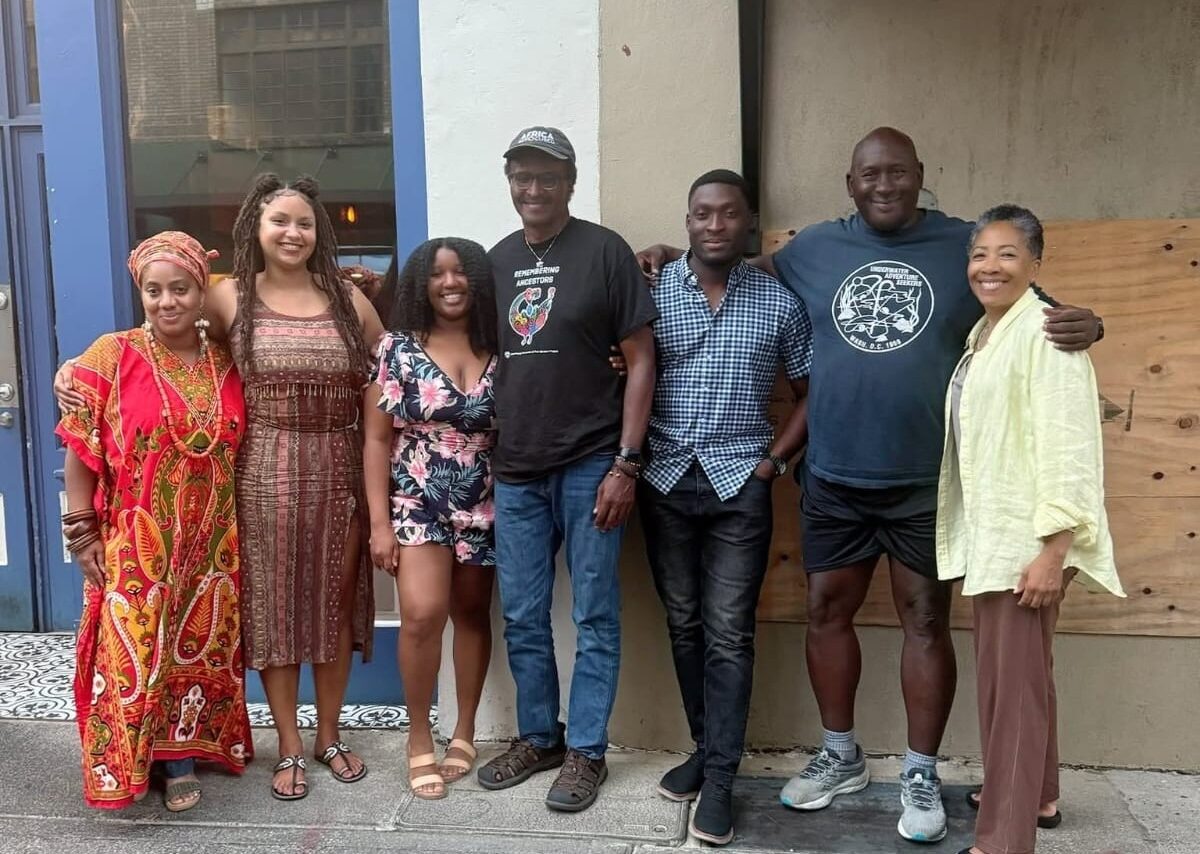
Slave Wrecks Project and partners in Mobile Alabama, 2025.
Another highlight of my summer was my time in Africatown, Alabama, alongside Jay Haigler, Gabrielle Muller, Kamau Sadiki, and Bria Brooks, as part of the SWP’s Africatown Swim to Scuba program. The project aims to reconnect residents of Africatown to their submerged history by providing access to water for swimming and scuba diving. This experience left a deep impression on me, both through the program’s visible impact on local youth and the emotional significance of this place: Mobile was the disembarkment point for the enslaved persons from Benin on the Clotilda. Being there was for me a symbolic return to my ancestors who were forcibly displaced.
These experiences between Biscayne and Africatown strengthened my belief that Benin and West Africa can develop effective models for protecting underwater heritage by drawing on methods that combine research, conservation, community involvement, and collaboration across the continents. They also reinforced my dedication to helping preserve our marine ecosystems and the remnants of our submerged history.
Underwater spaces hold stories that cannot speak for themselves. Protecting these memories requires people who are trained, attentive, and committed to their preservation. My time in Biscayne reinforced that responsibility and my determination to preserve the heritage that lies beneath the surface, both in West Africa and wherever those memories lie underwater.
My sincere thanks to the SWP, Biscayne, and Everglades National Park teams, and to DWP, for their steadfast support.