Rituals of Collecting Sea Water
By Babalorisá Emerson Mec de Ósóòsí and AfrOrigens | December 18, 2025
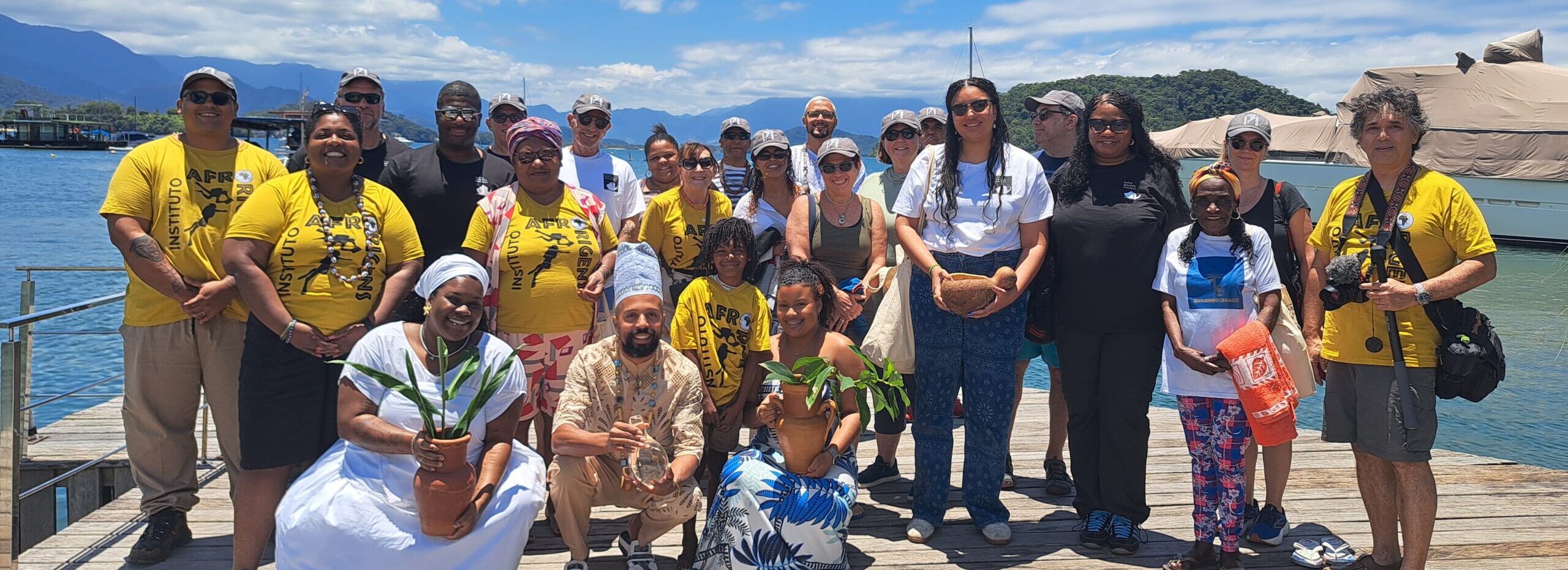 AfrOrigens and Emerson Mec wrote this post to explain the process of collecting water from the site of the Camargo for inclusion in the In Slavery’s Wake exhibition in Rio de Janeiro. Mec is a representative and spiritual leader of the Quilombo do Santa Rita Bracuí, an Afrodescendant community that traces its origins to those trafficked to Brazil aboard the Camargo. To read more about the purpose of this water and its role in In Slavery’s Wake, read In Slavery’s Wake and the Camargo.
Introduction
We will begin the ceremony by placing two clay vessels (quartinhas) used by Candomblé practitioners for religious rituals, symbolizing the bodies of African men and women who died during the ocean crossing on slave ships. We will fill these vessels with seawater using a gourd (an ancestral utensil used
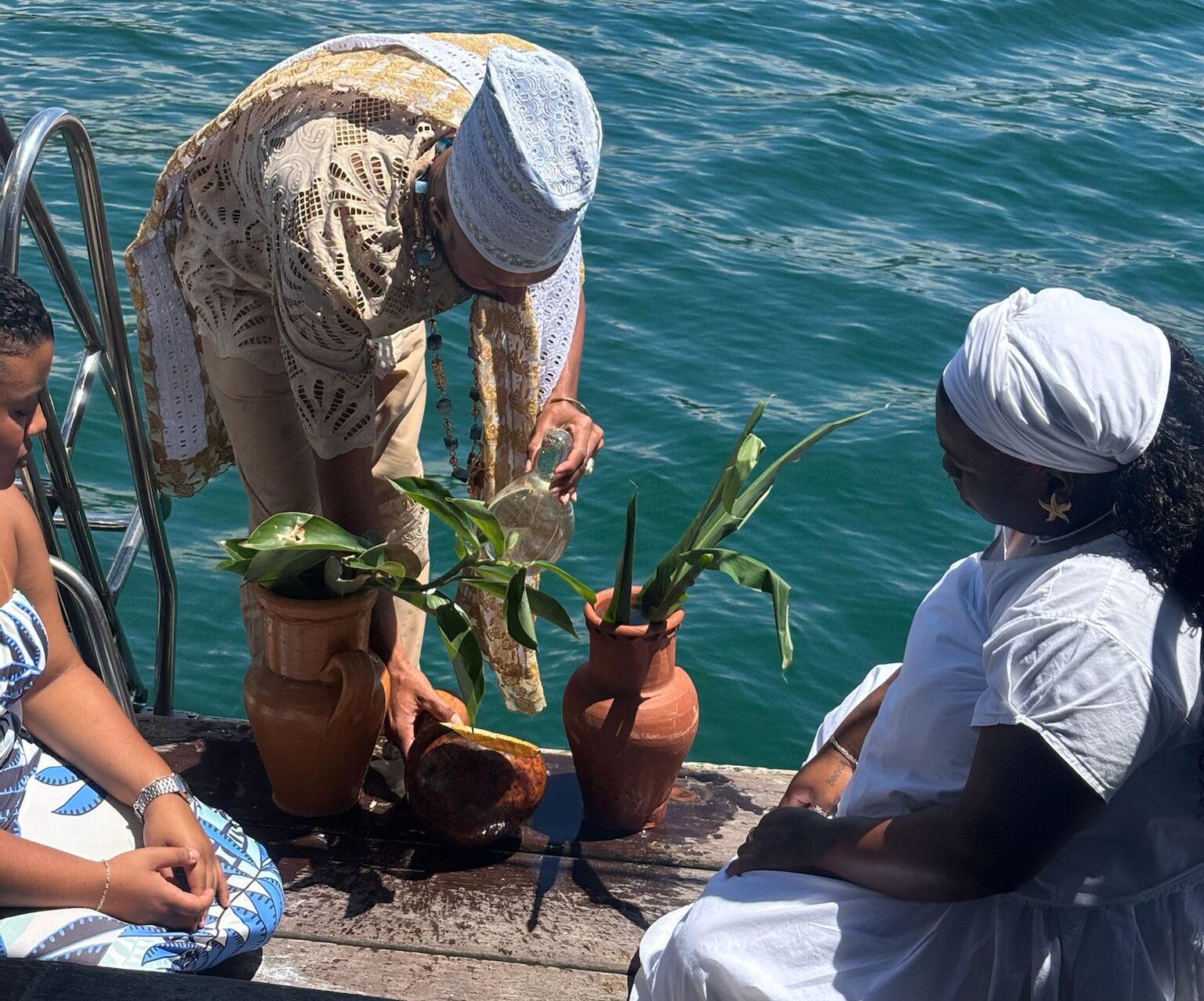
Mec collects water from the site of the Camargo and placing it in clay vessels, Johanna Obenda, 2025.
for numerous purposes by both Candomblé practitioners and traditional communities), as water is the symbol of life that nourishes and sustains us.
In the ceremony, we will offer flowers to the Orishas Yemanjá and Oxum, seeking to appease and honor their energies, recognizing the pain and suffering that their elements endured during the slave trade across the oceans. The waters that were used for the greatest barbarity in history, which took enslaved people all over the world, now become a space of healing and memory. With the flowers, we symbolize respect, historical reparation, and the search for harmony, transforming pain into a path of spirituality and peace.
About the Orishas Osun and Yemanjá.
Yemanjá, the mother of the salt waters, is the protector and nurturer, symbolizing motherhood and the protection of the ocean. Oxum, in turn, is linked to fresh waters, bringing fertility, sweetness, and prosperity to rivers and lakes. The gourd, an ancestral symbol of creation, represents the vessel of life, and the waters contained within it symbolize origin and renewal. In this context, Yemanjá and Oxum not only nourish life but also safeguard ancestral memories. As we reflect on the slave trade and the lives lost in the interoceanic slave trade, we recognize the importance of honoring these memories. The waters, which carry both life and pain, become a sacred space of healing and memory. Thus, the connection between Iemanjá, Oxum, the calabash, and the human being is revealed as a path of respect, reflection, and spiritual renewal.
The Journey of the Seawater to Aiê Eletuloju and the Washing of the Cross of Souls.
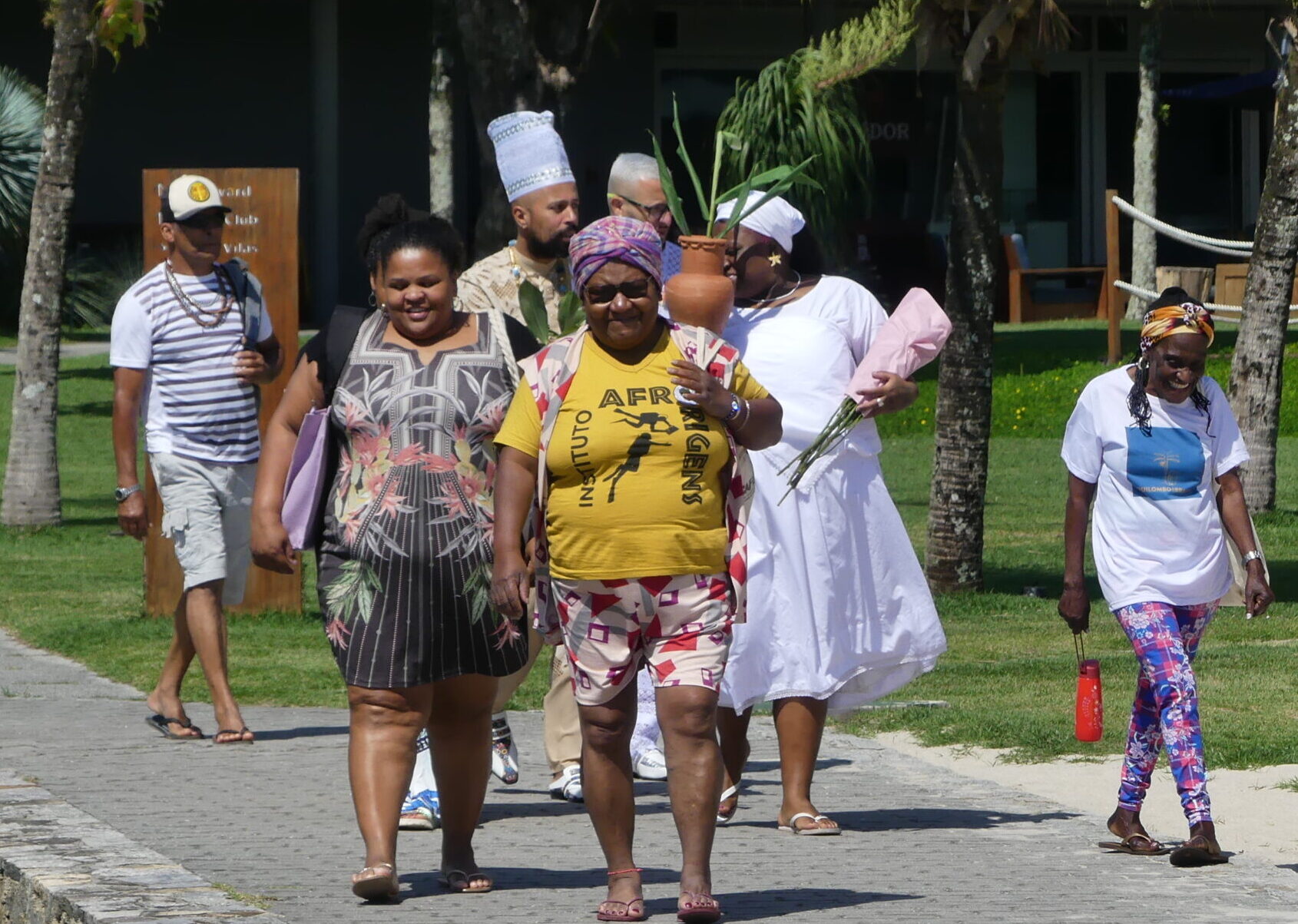
Members of the Quilombo Santa Rita do Bracuí carrying the vessels and flowers to be taken to the site of the Camargo, Yuri Sanada, 2025.
We will place the clay vessels containing seawater at the Crossroads of Souls and then wash the Crossroads with seawater and perfumed water, singing songs (chants) reverencing the Black Elders. The seawater, a vast symbol of memory and life, carries within it the profound history of our ancestors. In the ritual of washing the Crossroads of Souls, we invoke the wisdom of the Black Elders, spirits who keep alive the memory and resistance of Black people, ancestors of all those who arrived here through the Diaspora and all their descendants who continue to fight for equality and respect. The water, which united continents and also marked the pain of the diaspora, now becomes an element of purification and reverence. In this act, we seek to honor those who could not continue their own ancestral destinies, offering them peace and remembrance in the sacred waters.