The Camargo: A History of Global Connections
By Raquel Rodrigues Machaqueiro | April 28, 2026
The Atlantic Crossing
In 1852, the brig Camargo arrived in Bracuí, Angra dos Reis, with more than 500 enslaved Africans onboard. This trip, the last one on record, symbolizes not just the profound changes that the slave trade underwent after its illegalization in Brazil, in 1830, but importantly, how global this history is. The ship sailed under an American flag and with a mixed crew of Americans, British, Portuguese, Africans, Brazilians and Spaniards. It was captained by Nathaniel Gordon, a U.S. citizen from Portland, Maine, who took the ship to Mozambique to load men, women, and children from Ilha and Quelimane (Zambézia province). A total of 550 Mozambicans were forced into the Camargo, but only 500 survived the trip. Given that Brazilian authorities were actively fighting the illegal traffic, the captain decided to destroy the evidence of his crime, torching the ship and sinking it, and escaping the region disguised in women’s clothes. The arrival occurred clandestinely in the property of Joaquim de Souza Breves, a coffee magnate, who later tried to illude the authorities by claiming no responsibility in the crime.
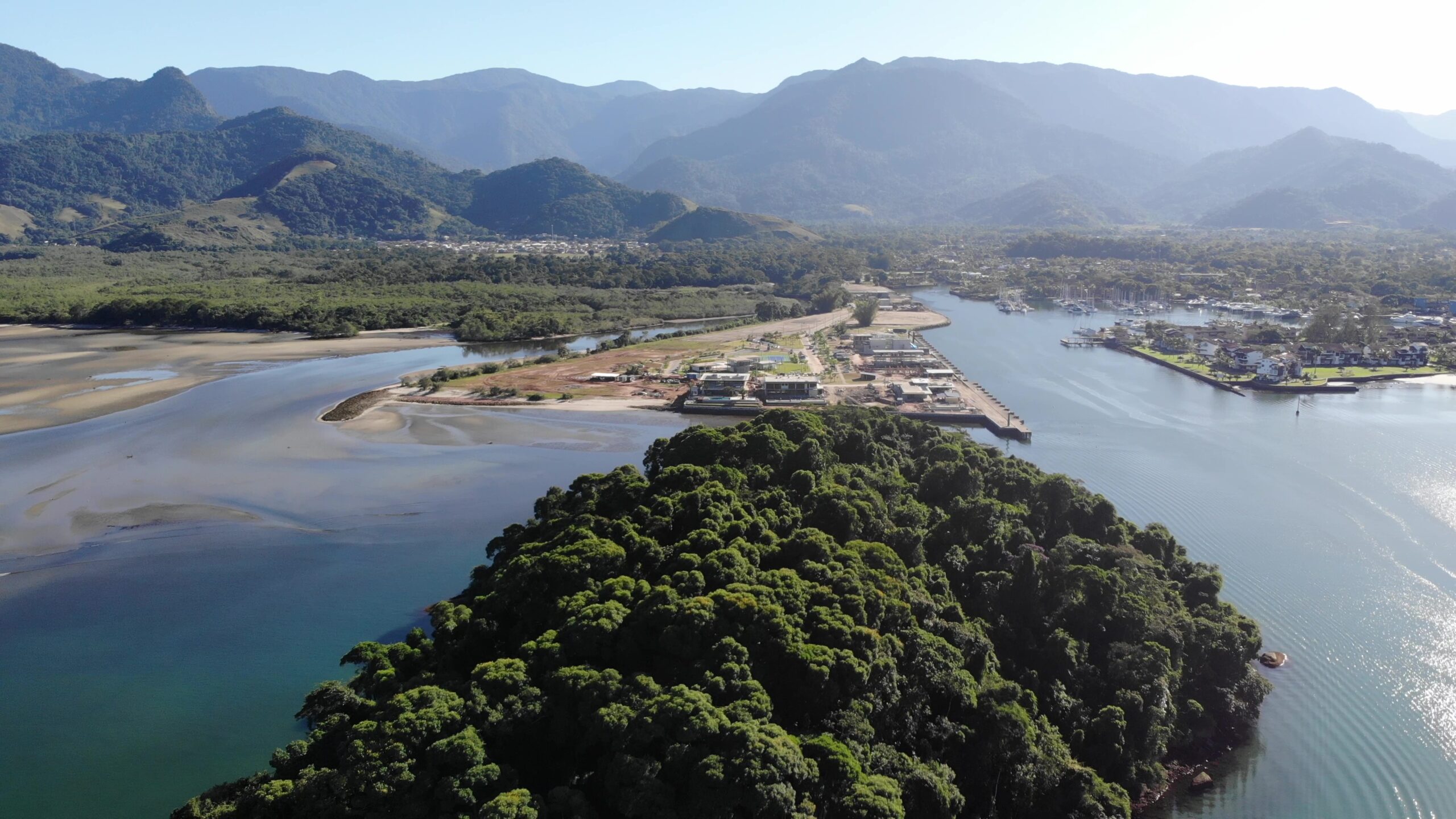
The landscape near Angra dos Reis, Brazil, Yuri Sanada, 2023
The Economics of the Illegal Slave Trade
Joaquim Souza Breves, the person considered to be the main organizer of this trip, was not new to the slave trade, but only started this activity once it became illegal in Brazil. While his name cannot be found in any of the records of ships arriving in Valongo, the largest reception port of enslaved people in the Americas, he pioneered this new wave of traffic and was directly responsible for at least, eleven arrivals in his properties between 1837 and 1852, with a total of 4388 enslaved Africans on board. Some estimates indicate that Souza Breves might have been directly responsible for the enslavement of 6000 people. This new period of the slave trade was marked by important changes meant to illude the authorities. If the arrival ports moved to less known areas – of which the Breves’ properties in Bracuí and Marambaia were important examples – the capture of Africans was also dislocated to the Oriental coast of the continent, mainly Mozambique Island, Quelimane, and Inhambane.
The activities of Joaquim Souza Breves were supported by a large network of people across the world, and demonstrate how the coffee plantations rapidly grew intermingled in the slave trade, promoting the continuation of this activity after its criminalization for at least two more decades. In fact, the existing infrastructures of coffee export were quickly appropriated to receive, fatten and distribute the incoming enslaved across the coffee plantations situated in the interior and mountain regions. Santa Rita do Bracuí, purchased in 1829 by José de Souza Breves (Joaquim’s brother), was particularly apt for that purpose, containing barracoons where the enslaved were kept to gain weight and recover from the Middle Passage, and the needed infrastructures to produce cachaça – a precious product for the acquisition of slaves.
Despite their strong participation in the coffee economy, slave trading was the major component of the Breves’ fortune which involved several members of the family, namely Joaquim’s brother, José de Souza Breves, and Joaquim’s father-in-law José Gonçalves de Moraes, Baron of Pirahy. Joaquim’s son, José Frazão de Souza Breves, and João José dos Santos Breves (Joaquim’s nephew) who were both council members, helped Souza Breves maintaining his illicit trade by sanctioning his reputation among the municipal authorities.
Resistance to the Illegal Slave Trade
The Camargo case also speaks to an important moment for Brazilian authorities who were making a serious effort at curtailing the illegal slave trade. In their endeavors to capture those responsible for the arrival of new enslaved people in Bracuí, authorities raided coffee plantations for the first time, infuriating landowners like the Souza Breves. The case caused commotion and wide debates in the Brazilian newspapers where some of the culprits hypocritically affirmed themselves as being against the crime of slave trading. Throughout the months following the Camargo’s arrival, authorities were able to recover 68 Africans, and criminally processed several suspects, including Joaquim Souza Breves. No one was convicted, and very few Africans were declared free.
Several descendants of those brought aboard the Camargo, as well as other enslaved Africans from the region legitimately occupied the Bracuí property, left in testament to them by Souza Breves. They founded the Quilombo of Santa Rita do Bracuí, which was recognized by the Palmares Cultural Foundation in 1999, and by the Brazilian Federal Government in 2024, after a long fight held by the quilombolas in the preservation of their history and rights. Those living in the Quilombo of Santa Rita do Bracuí are the ones who, for the past two centuries, have held the memory of the Camargo and of those violently brought onboard, enabling the recovery of this important history that belongs to all of us.
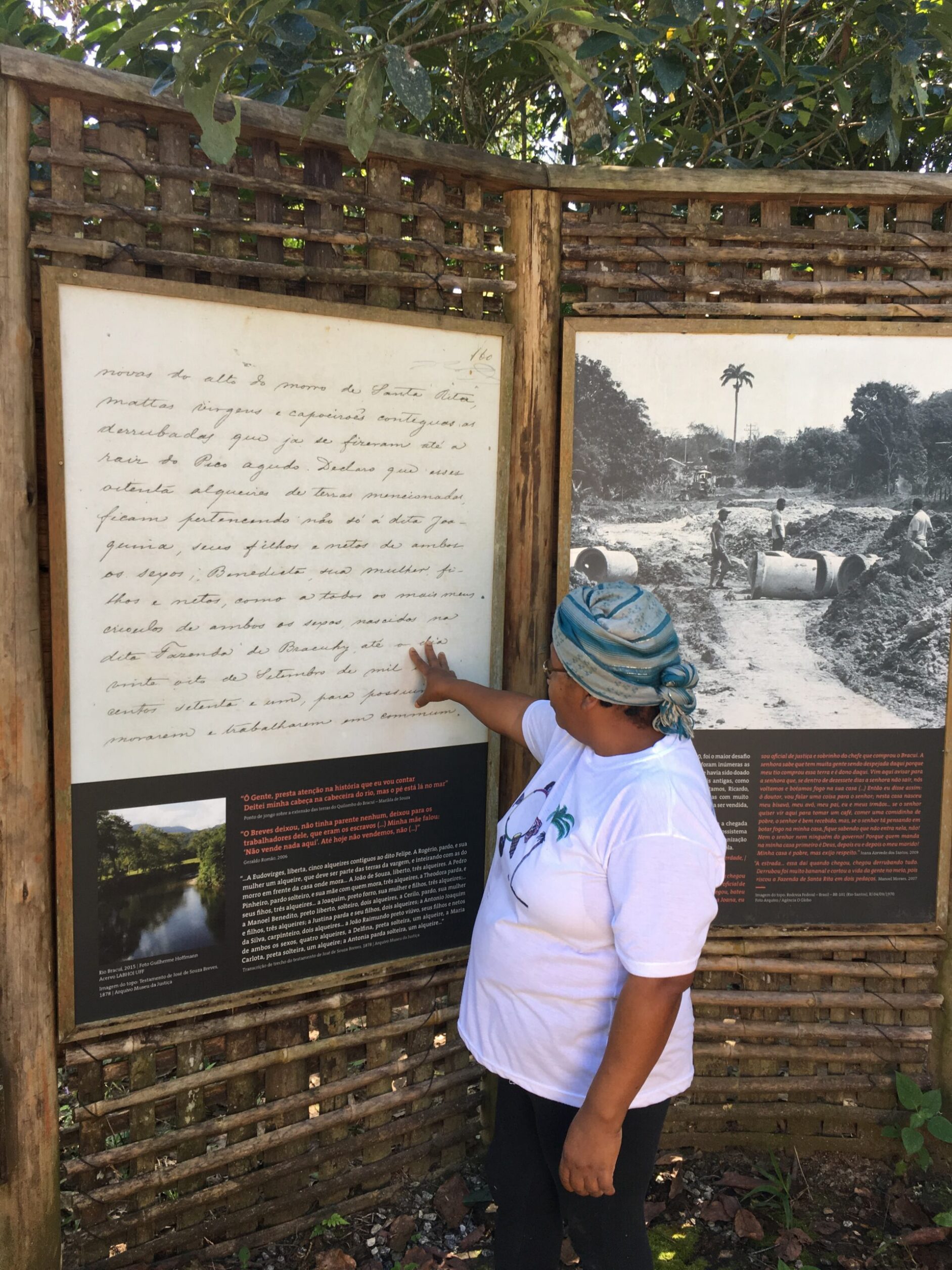
Member of the Quilombo presenting on its history, 2023