Reflecting on Teaching Difficult Histories in Portugal
By Luís Graça, Professor of Portuguese and Portuguese as a Non-Native Language | May 12, 2026
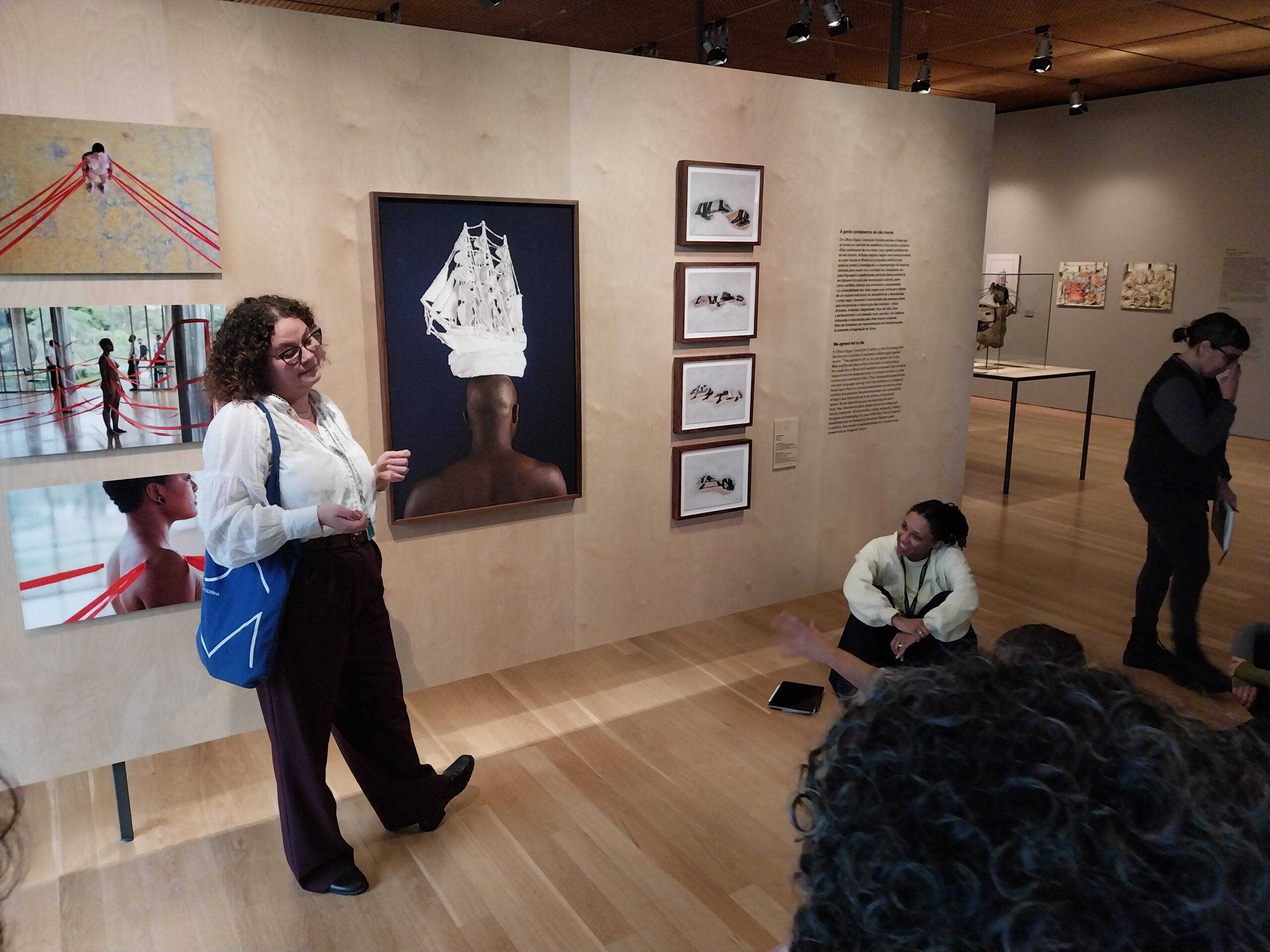
Confronting the reality of colonial oppression—the facts, the images, the accounts—can be unpleasant and uncomfortable. Nothing compares to the direct experience of being enslaved, raped, or oppressed, obviously—or of being a racialized person, an indigenous person, or a descendant of an enslaved or subaltern ancestor.
In Portugal, it is well known that we have extreme difficulty in dealing with these “difficult legacies,” these pasts that have not passed and continue to mark the present like a hot iron: we deny the facts, we take offense, we silence those who try to raise the issue, we justify barbarism. Even when we are shown and explained — pedagogically, calmly, imperturbably — what is there for anyone who wants to open their eyes and see.
The process of uncovering “difficult histories” and decolonizing individual and social minds and practices is slowly taking place, against the tide — still a long way from being able to even talk seriously about reparations, restorative justice, restitution, or compensation.
The experiences that arise are still niche and almost always attract those who are already “converted.” The training promoted by the Calouste Gulbenkian Foundation on “Difficult stories, difficult legacies — How to teach and talk about slavery,” which began in 2024, was an opportunity to learn more from those who have unearthed stories, names, and faces from the dustbin of history. The opportunity to connect with scientists, researchers, and teachers who organize complex and emotionally traumatic subjects in a pedagogical way is unmissable. The illusion that it is possible to access all data, all information, and all knowledge anytime, anywhere distances us from the essence of human learning: it is through interaction, in community, eye to eye, that we build ourselves cognitively as social actors with educational responsibilities—whether we are teachers, educators, or mediators.
During the training week I attended in the summer of 2024, I was able to learn and organize my knowledge internally, in contact with colleagues who had different backgrounds, different stories, and different questions. In addition to the dynamic presentations, the exercises, visits, and debates allowed us to think about the ethical and pedagogical implications of the whole experience. From now on, what would we change in our classes? How would we get around the pitfalls of many of the textbooks we use, which perpetuate colonialist or Lusotropicalist views of history? How would we give a voice to racialized students who feel segregated, silenced, and marginalized? How would we use this knowledge to dismantle the racist, xenophobic, or colonialist narratives that circulate in the minds of many students? There are no right answers, no obvious ones, and no ready-made models. Only one thing is clear: we cannot give up trying, failing, or trying again.
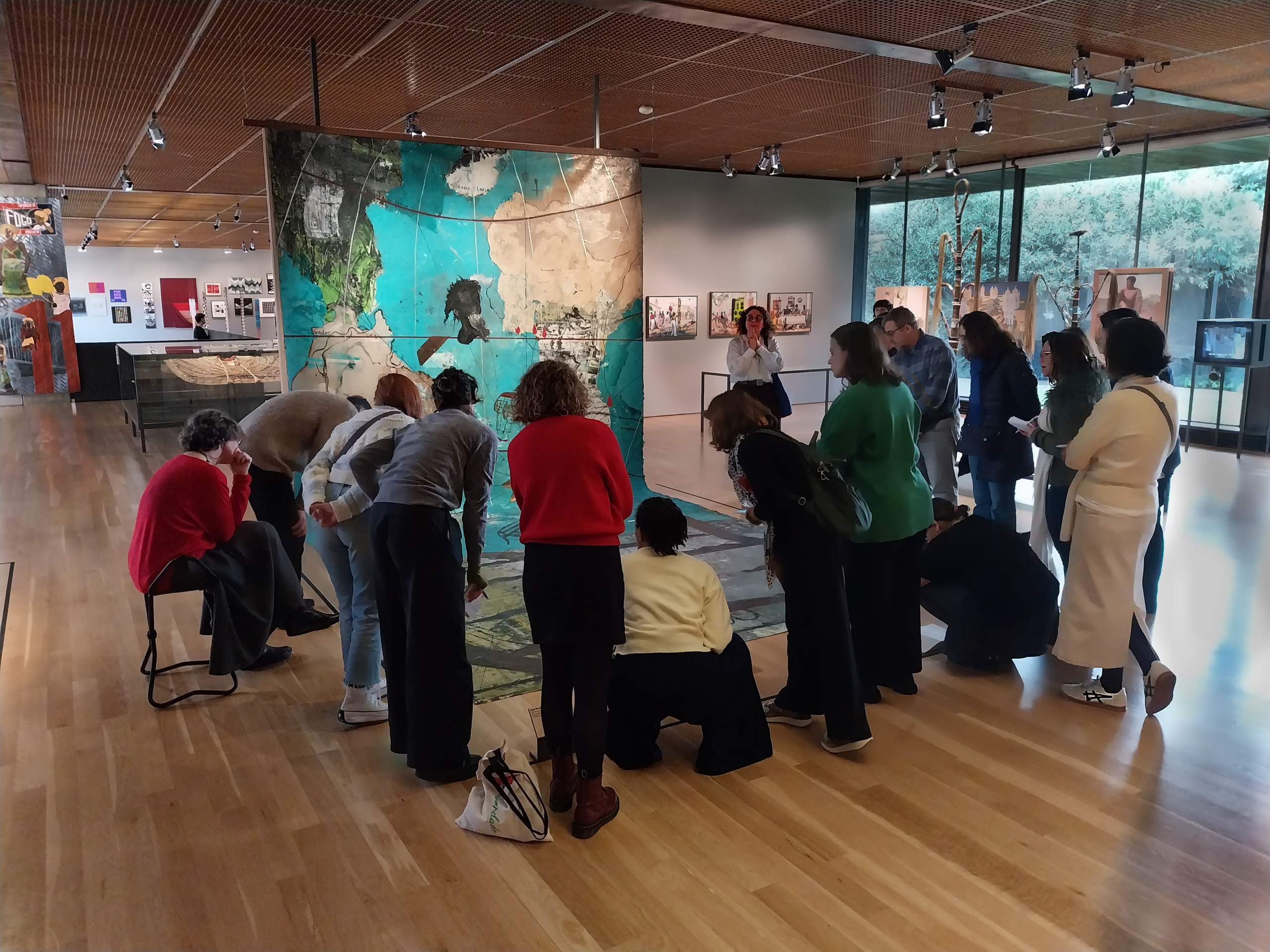
Guided Tour of Complexo Brasil, 2026, Raquel Machaqueiro.
At the end of 2025, I was delighted to receive an invitation to participate in a session about the exhibition, Complexo Brasil, which included a guided tour. It was another moment of discovery and sharing, where I was able to reconnect with colleagues from the 2024 training program and meet colleagues who had completed the training in 2025. This exercise of “uncovering the concealment of Brazils,” in the curators’ words, allowed us to deepen the potential of the arts—visual, plastic, or sound—in nurturing an organized sensitivity to that giant “racial and cultural mosaic of great power” that is Brazil. If the formation of difficult legacies had focused on the other side of the Atlantic, this short morning of sharing took us on a journey that took root. The visit to the exhibition, guided by a Brazilian guide, led me to discover new angles and perspectives on this immense continent, in an interactive, stimulating, and exploratory dynamic. I hope it will be possible to repeat these experiences and lead others to be enchanted and discover themselves in these journeys of democratic, anti-racist, anti-colonialist, and counter-hegemonic strengthening.
Learn More about our work in Portugal
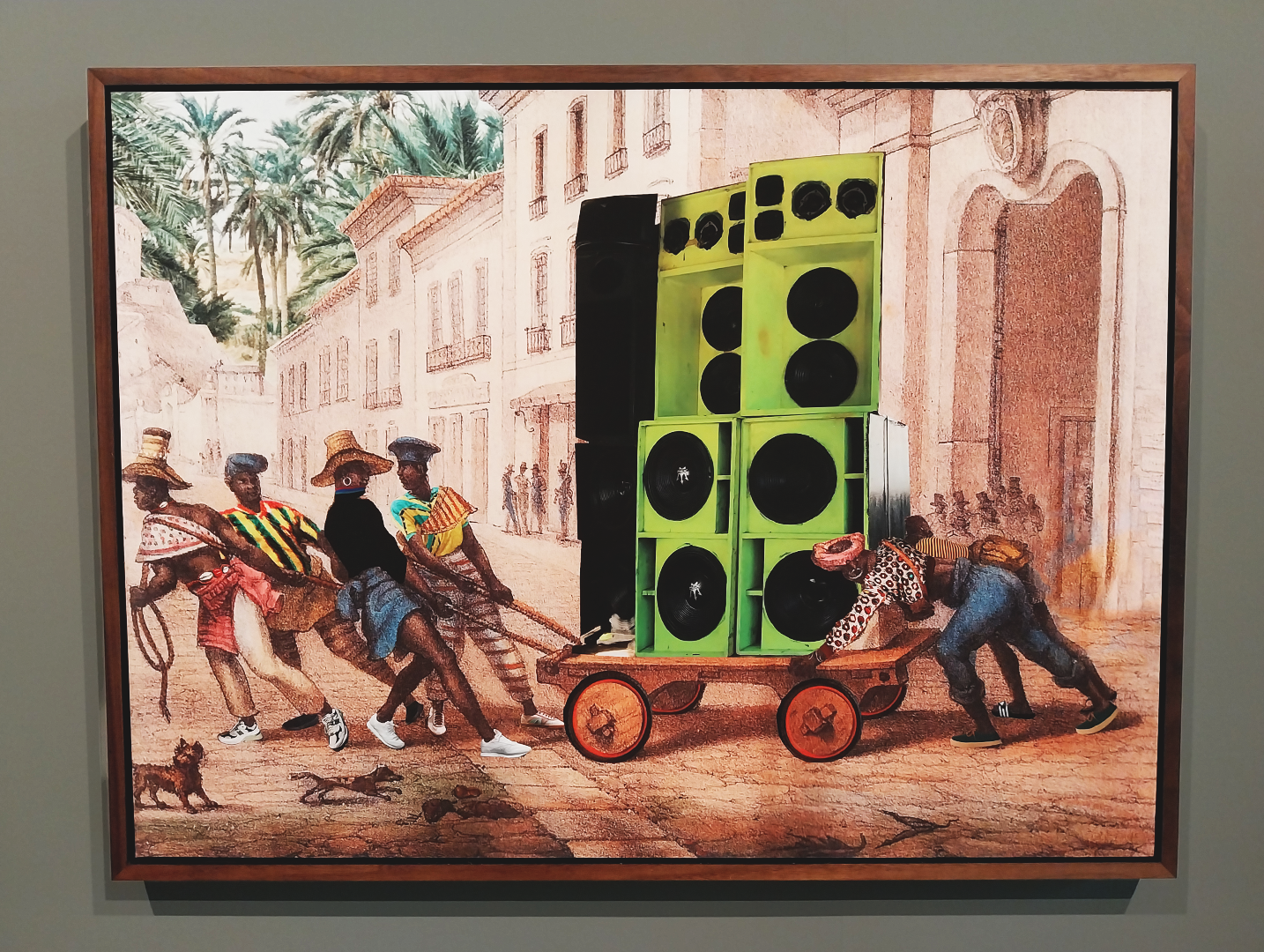
Art in Complexo Brasil, 2026. Image by Raquel Machaqueiro.
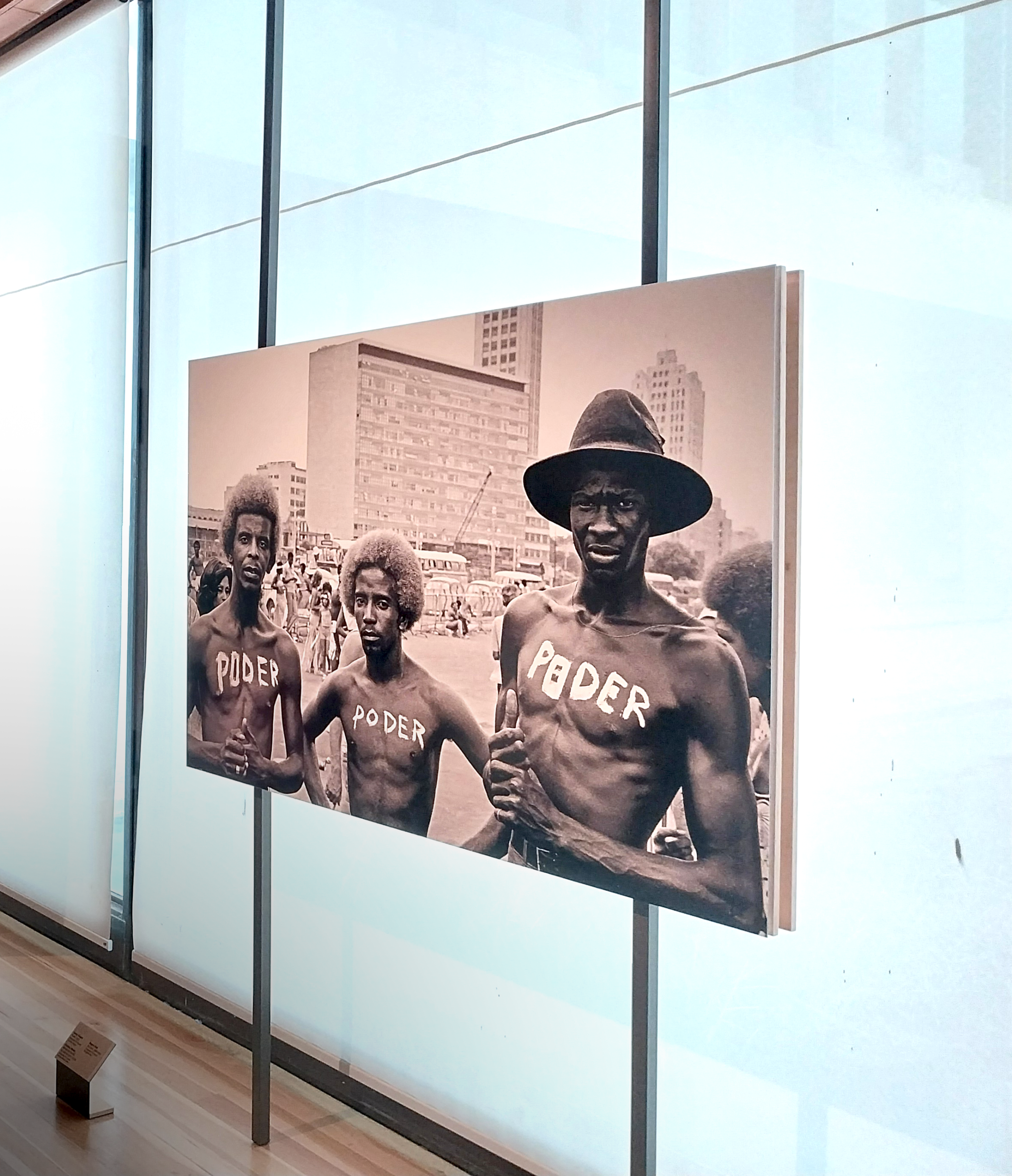
Art in Complexo Brasil, 2026. Image by Raquel Machaqueiro.