Unfinished Conversations: Africatown, Alabama
By Gabrielle Miller | May 18, 2026
The following essay originally appeared in the book In Slavery’s Wake: Black Freedom Making in the World as “Unfinished Conversations: Africatown, Alabama.” To learn more about the international oral history project, “Unfinished Conversations,” visit The Simmons Center for the Study of Slavery and Justice at Brown University
Africatown and the Clotilda
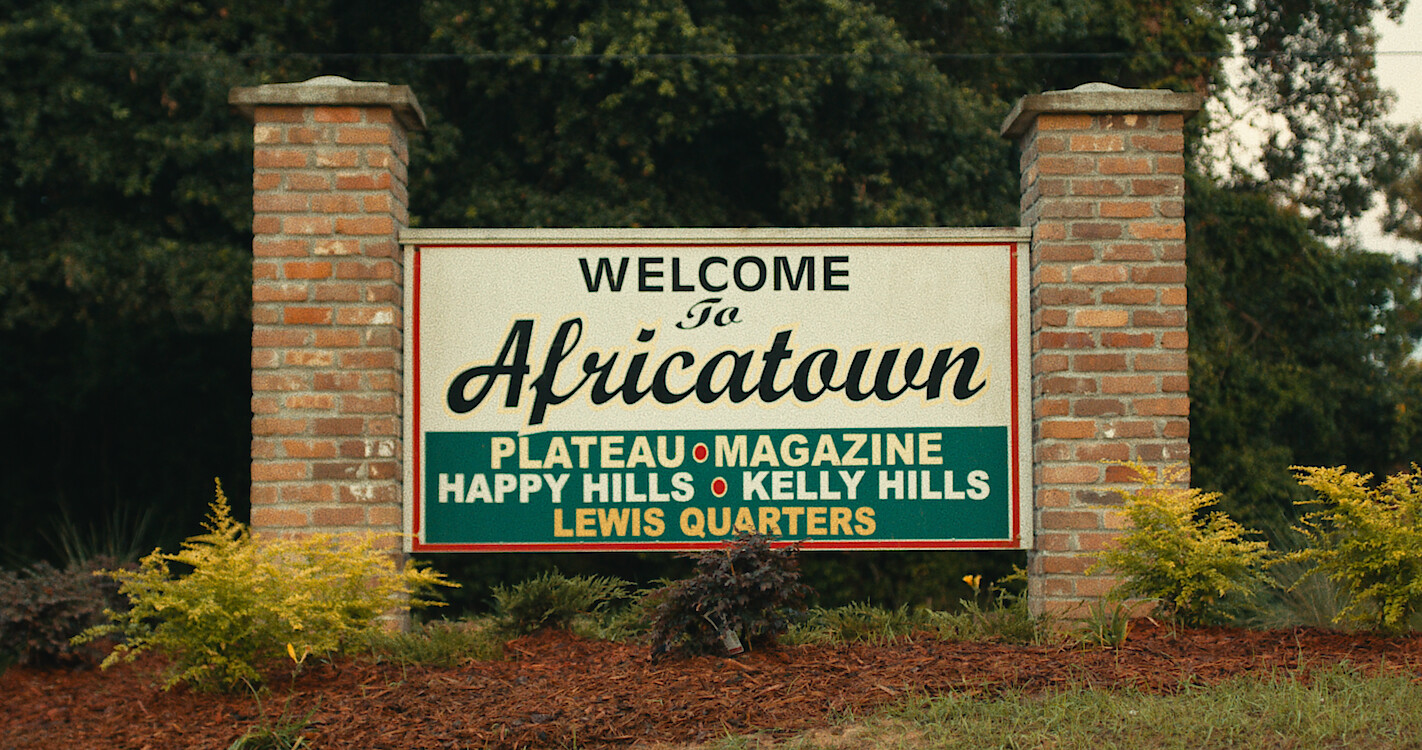
In 1860, more than fifty years after the legal abolition of the importation of enslaved people to the United States from Africa, the last known slave ship to arrive there docked on the shores of Mobile, Alabama. This schooner, called Clotilda, arrived with some 110 Africans on board. The captives, who had been illegally captured in Benin, were smuggled across the Atlantic on a clandestine vessel financed by a politically prominent Alabama family… After the US abolition of slavery five years later as a result of the American Civil War and the Thirteenth Amendment, many of those once bound together in the cargo hold of the Clotilda came together again with the intent of building new lives. Returning once again to their status as free people, the survivors—alongside the newly emancipated communities of southern Alabama—built a new space of belonging known as Africatown.
Who Tells the Story?
Global interest in this historical episode was catalyzed by the discovery of the remains of the Clotilda on the banks of the Mobile River in 2021. Numerous documentaries, books, and other publications have brought light to the stories of the survivors and their legacies from the perspectives of their descendants. The predominant narrative surrounding the creation of the Africatown community depicts a vibrant and thriving settlement built by those captives who survived the ship and subsequent years of enslavement. But this provides a limited picture of the broader coalition of free and enslaved people who were establishing Africatown alongside the survivors from the Clotilda. Together, this diverse group created a community rich with orchards, businesses, and a support network for navigating their regained freedoms in what would become a new home.
Unfinished Conversations highlights the voices of Africatown families who have safeguarded their stories for generations. Descendants continue to make their perspectives known and voices heard. Through their interviews, they collage a picture of a community determined not just to survive but to thrive. This community was built by those ferried on the Clotilda and by the enslaved and free people in the neighboring areas of Magazine, Plateau, Happy Hills, Prichard, and beyond. This community has always been committed to building freer futures for themselves and for next generations, in the wake of slavery, Jim Crow, urban renewal, industrialization, and systemic injustice.
Here, in their own voices, members weave together stories of preserving generational memories and oral traditions, reclaiming access to water, navigating and repairing environmental damage, and, ultimately, defining the meaning of freedom.
Barja Wilson
Africatown is made of many small towns, and its borders are the waterways that almost entirely surround it: the Mobile River to the east, Hog Bayou to the northeast, and Three Mile Creek to the southwest. As prevalent as the river and its many tributaries are, if you were to visit, you would notice industry and transportation infrastructure almost entirely blocking access to these waterways. Baja Wilson, a Mobile native and environmental planner, frequently organizes teams of youths and young adults to clean the historic Old Plateau Cemetery and test the waterways surrounding Africatown for safety and cleanliness. Through her work advocating for better environmental conditions, she has learned a lot about the landscape prior to the encroachment of industry: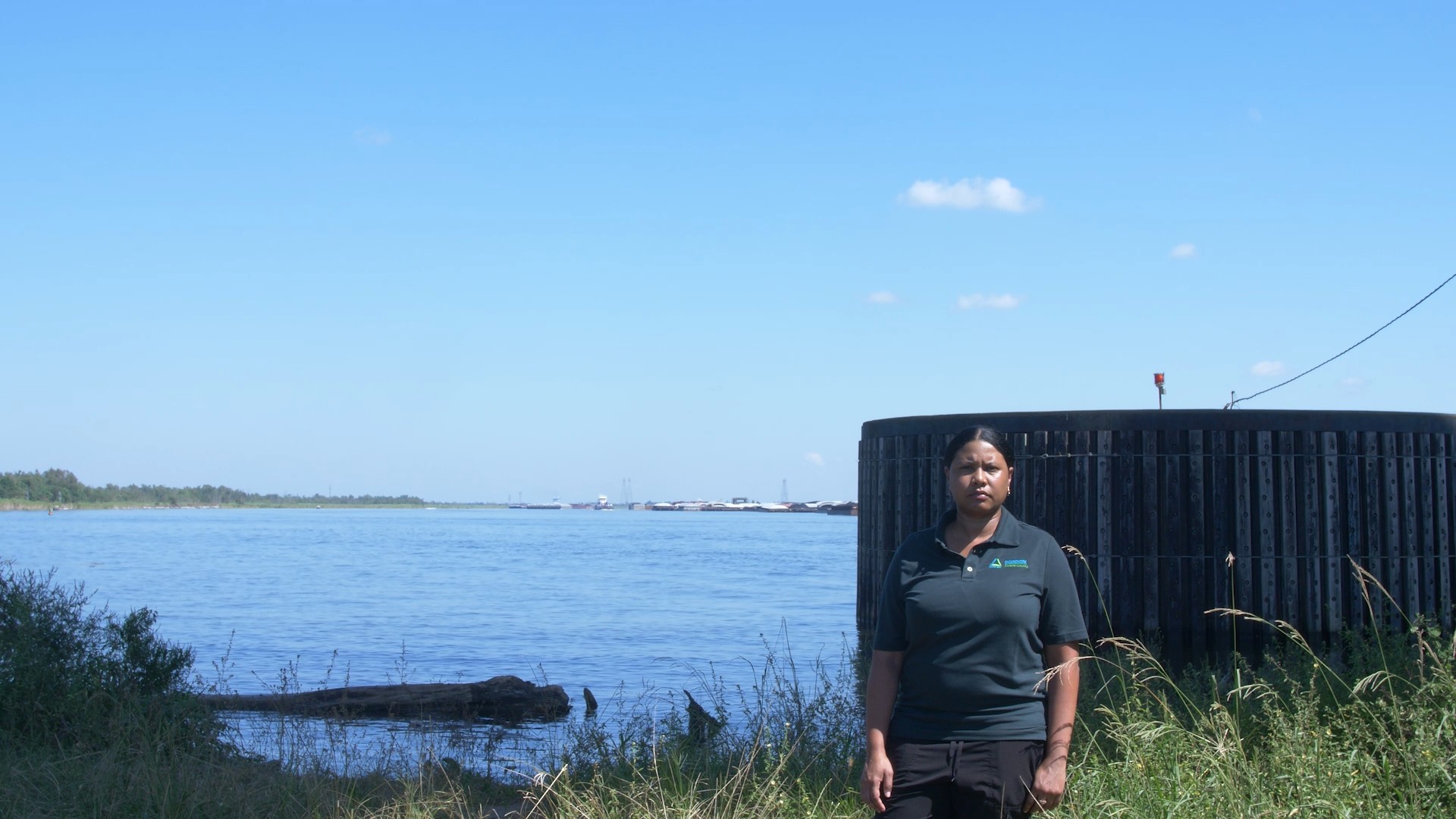
“Before the industry came, I mean, this was vast—this was vast open land. Something you hear the elders talk about is they used to hunt wild boar around here, wild hogs. The trees, the fruit trees, grew plentifully. You didn’t really have to go to the grocery store, because everything was here on the land. And then, again, access to the water was very easy. People used to fish and play in the water, boat in the water. Access to Three Mile Creek is pretty much unheard of now because you have industry and industry owners who have purchased parcels all along the river—the Three Mile Creek area—so the citizens don’t have a direct access to Three Mile Creek anymore like they used to, except for on Old Perception Road where the Clotilda Landing One is, which the county just recently purchased and, hopefully, that will be put back in use as public space.”
For almost one hundred years, toxic fumes and chemicals from oil, asphalt, logging, petrochemical, paper, coal, and other polluting industries have choked the air, poisoned the waters, spread cancer, and made healthy futures more untenable as time goes by. As these industries have come and gone, Africatown residents have experienced the shrinking of their land, resources, and lifespans. Still, not all natural landmarks have been lost.
Arlean Horton
At the heart of John Kidd Park, a public site nestled between Africatown’s school, community center, and churches, is an almost mystical tree called the Witness Tree. From its robust trunk, a canopy of branches so large and long that they touch the ground, creating a cocoon. Under its shade, sheltering from the sweltering Alabama sun, we asked Arlean Horton, a great-granddaughter of the park’s namesake, If this tree could tell us about all it has witnessed over Africatown’s long history, what would it say? Horton stated,
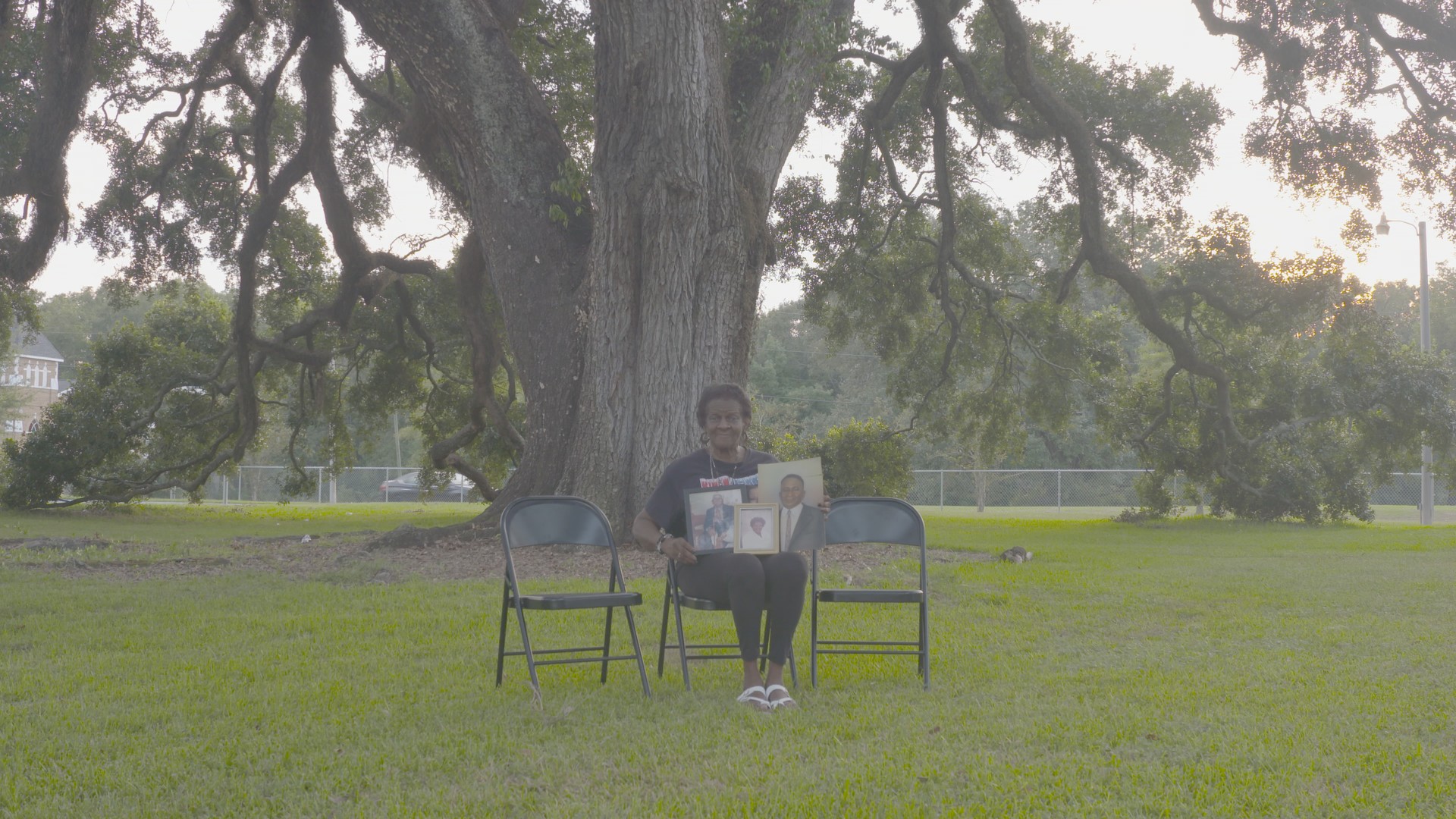
“My great-grandfather John Kidd was born in 1876. And when he got here, this tree was pretty much the size that you see it now. . . . It may be as much as three hundred years old. . . .This tree and what it witnessed during its time of being with us. . . . It has withstood numerous storms. We used to have a barbershop right here under it. We had a grocery store behind me, before it became Kidd Park. We played here under this tree. Swings, wooden-bottomed swings were here before the park was created. We had houses. About four or five houses was here in the park. They were eventually taken down. . . . This tree used to be a sanctuary.”
As Horton reminisced, a former mortuary owner stepped out of his car to add his memories of how families would bring their recently departed loved ones to this tree to hold services and how in the worst days of industry there were few nights he wasn’t busy making preparations for another community member lost. This Witness Tree has been around to see the comings and goings, joys and sorrows, and lives and deaths of many generations.
Lorna Gail Woods
Like the Witness Tree at the center of John Kidd Park, Lorna Gail Woods holds memories of Africatown past and present. Woods, a descendant of the Clotilda survivor Charlie Lewis, preserves the community’s photos and objects in a small museum of her own making located in an area known as the Den in the Mobile County Training School (MCTS). Established for African American students in 1880, MCTS was once a high school and now functions as the middle school for Africatown and surrounding areas. Alums include famous athletes such as Tommie Agee, Cleon Jones, and Billy Williams, yet in Woods’s museum, any Africatown resident, from survivors of the Clotilda, to those who live there today, can be seen and celebrated. Woods also safeguards history and memory through her art of quilt-making, passed down by the women in her family. She finds freedom in these acts of remembrance and described what freedom means to her:
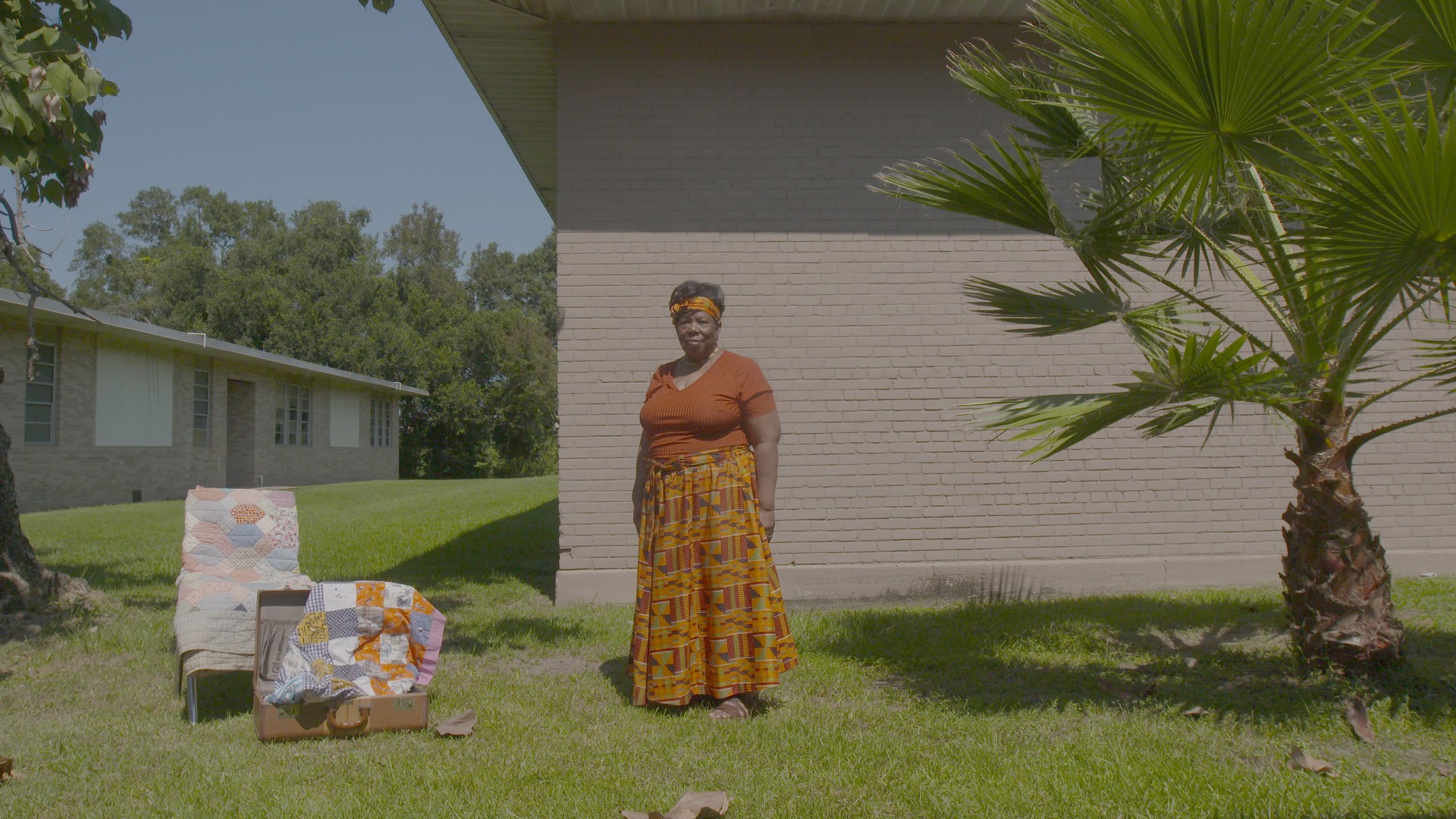
“Freedom may not sound like a good word when you’re talking about people who know their folk was enslaved and their freedom was cut off, but I feel like freedom is when your mind and body and soul is not restricted. You can think what you wanna think, do what you want to do, but you know the difference of freedom. When those people marched with Martin Luther King, they was tired of being tired. They had worked hard as they could. They had did what the Bible say and they felt like they deserved freedom, but they couldn’t have it until people signed a piece of paper. Signing a piece of paper do not make you free. . . .
Look at the Queen [of England Elizabeth II], how they buried her and how people stood on the side of the road and threw flowers and waved at her. We don’t get that. We be lucky if a person bought us a flower off the side of the road sometime and give it to us. Not that we got to die to get our flowers, but I think it’s freedom when people’ll give you flowers while you can still smell them. I love flowers because they’re freeing. I love butterflies because they free.”
Emmett Lewis
Across town, the local barber Emmett Lewis facilitates a different kind of communal preservation. Lewis, another descendant of Cudjo Lewis, discussed the intimacy of the barbershop as a space where coming together provides a setting for witnessing and safeguarding history. Once they sit in Lewis’s chair and are surrounded by the barber’s cape, patrons are safe to voice their thoughts, accomplishments, and even hardships. Emmett Lewis, who finds himself sharing and receiving many stories in his barbershop, sees this space as preserving history:

Joe Womack
Joe Womack, an MCTS alum and Africatown environmental activist, sees his role in building a freer future as protecting his community’s environment and restoring its relationship with the natural landscape that he experienced in his youth. Swimming in the surrounding waterways, fishing and crabbing, and growing gardens and Arlean Horton, 2022 orchards were hallmarks of his time growing up in Africatown. Over his life, he has witnessed the ongoing environmental degradation caused by pollution and industrialization. Womack reflected on this degradation and what it would look like to create a future in which residents are healthy and can enjoy the richness of their community’s natural environment in perpetuity
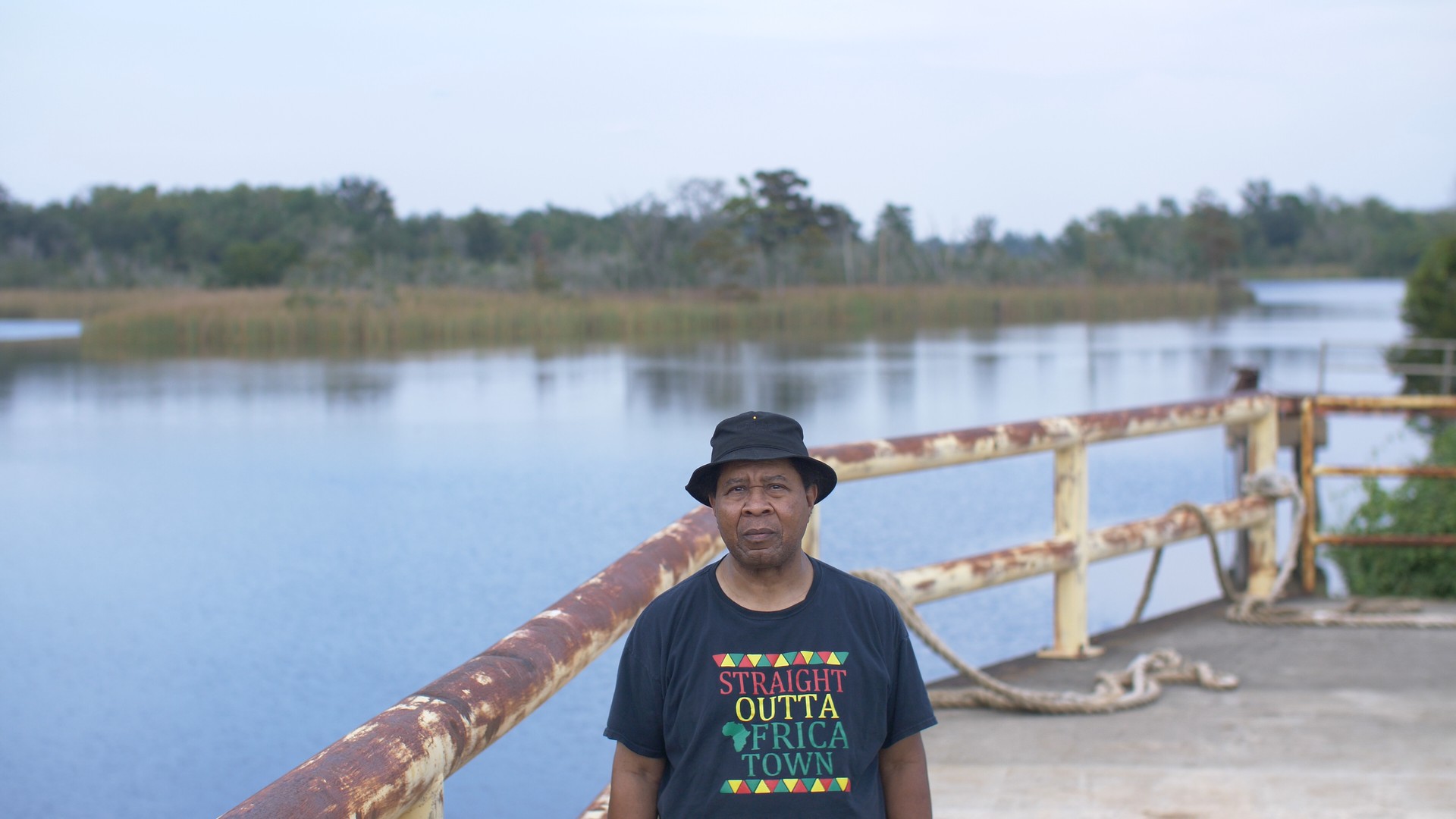 “Industry was all around us, but we still found a way to go to the water and try to enjoy as much as we can. What we’re doing today is trying to get our kids to recognize that water is right here and to take advantage of it. Now in the meantime, we don’t want them to experience pollution like we did. So in order for that to happen, we’ve got to get the industry[ies] that are here to clean it up. They made it dirty, so we want them to clean it up, and we don’t want any more polluting-type industry in the area. And so to do that, what we have to do is get those governmental agencies to do their job, to police the area, to find out what’s here, and to clean it up, because this community is something that the people love. We’re a resilient community. We fought for it for years, and we really don’t want to give it up, because we think that our community is a great spot. . . .My grandaddy . . . was a storyteller, and he told a lot of different things, and he had a lot of quotes, and one that he said that I remember is “Don’tlet nobody take your watermelon.” You know, don’t let something that you love be taken away from you ’cause someone else said it ain’t good. A lot of times they’ll say it’s not good because they want it. And if they can get you to run away from it, then they’ll get it for little or nothing. So don’t let ’em take your watermelon.”
Christoper Williams
Minister Christopher Williams is the pastor of Yorktown Missionary Baptist Church, one of Africatown’s oldest places of worship. Built in 1883 by a group of Christian leaders from the Plateau community, it was originally known as Three Mile Creek Baptist Church. In Africatown, churches are the lifeblood of the community, serving the residents since its inception. Witness to the births, lives, and deaths of Africatown residents, Pastor Williams has unique insight into changes in this community over time:
“When I first came here sixteen years ago, the first year I did right at twenty funerals. The pastor down the street, Pastor Brady, he did twenty-one his first year, which was the year before I got here. . . And a lot of those funerals was cancer. A lot of those funerals was breathing problems, and nobody would help. Nobody would help us with it. I contacted the CDC [Centers for Disease Control and Prevention]. I don’t know who, I contacted so many people, but they keep telling you it’s not a cluster, but you keep having people that died from cancer. . . . I believe—this is my opinion, I can’t say it’s scientifically backed—but I believe that most of the people whohave died or is sick is because of the water and because of the poison that came into their lives through no fault of their own.
You go to West Mobile, you see none of this. That is not freedom to me, that’s an imprisonment. . . . [To] me it is “If we can wipe this community off the face of the map, then nobody’ll know about the Clotilda, about the people that were kidnapped in Africa and brought here.” So freedom in Africatown is totally different than freedom in West Mobile. Freedom in West Mobile means that “Oh yeah, you? You’re welcome here,” knowing that you’re not. . . . “We don’t want you here, period, because we want to remove you.”. . . Freedom for some of these people [in Africatown] is being able to wake up without having all the smoke and fog and smog around them, without thinking and worrying about the dust and the pollution that’s coming into their house because of all the heavy traffic and all the stuff. You go to Magazine Point . . . riding down the road at midnight stirring up the dust and it’s blowing into the people’s house. They can’t turn their air conditioner on. . . . Freedom [means] being able to live a comfortable life.”>Though this is a small representation of the stories collected for the Unfinished Conversations series, these interviews allow a glimpse into the complexity of the afterlives of enslavement in Africatown. They show that the struggle for dignity, prosperity, health, and freedom doesn’t reside only in the past.”
Recognizing that this struggle is connected to a system that arose with the globalization of slavery and capitalism and continues to impact the descendants of the enslaved today makes it possible to devise strategies that can get to the root of these patterns in history. It is an ongoing and interconnected practice of attention and love, in which imagining and enacting freer futures means caring for the past and the present as well.
This is an excerpt from the book In Slavery’s Wake: Making Black Freedom in the World
Learn more about the Slave Wrecks Project’s work on our Location Page: Africatown, U.S.A.